Suzuki DRZ400S: An Everyman Dirt Bike, for Decades
If there were any logic in the world, if you looked up the word reliable in a dictionary, there would simply be a picture of a Suzuki DRZ400. Since the turn of the century, the big Suzuki has been used and abused all over the world, from California to Canberra and Canterbury to Cape Town, and put up with anything thrown at it. Like a motorcycling version of The Terminator, there seemed to be nothing that could stop the mighty DRZ – except perhaps the Euro 3 regulations.
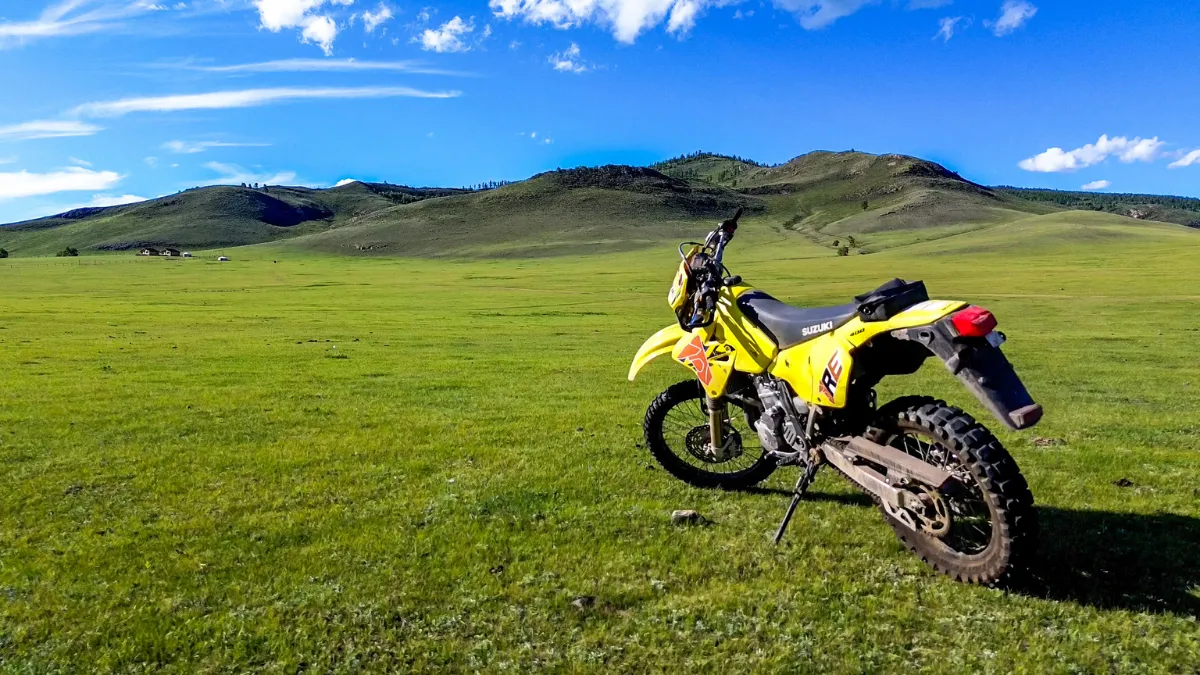
While the technocrats in Brussels might have temporarily defeated the Suzuki in the UK a mere nine years after its launch, for the rest of the planet the DRZ has stayed the consummate trail bike for over 25 years and is still going strong, despite being superseded by the new fuel-injected and slightly sanitised DR-Z4S. Powerful enough to slog through everything from a Welsh bog to the Australian outback, and comfortable enough to make hours of tarmac perfectly bearable thanks to that almost sofa-like seat, the DRZ400 remains a firm favourite with dirt riders – even the ones who sold theirs long ago and moved on to lighter, more agile machines. The mere mention of those three letters, DRZ, can still set an older trail rider going a bit misty-eyed.
No wonder it is one of the two bikes we offer on the Gobi Explorer, our Mongolian dirt-bike tour. The DRZ is still an extremely capable trail bike and ideal for crossing those massive landscapes in a degree more comfort than the more stripped-back enduro machines. So what makes the DRZ such a likeable old rogue?
Water-cooled Weapon
Powering the DRZ is an ultra-reliable and versatile 398 cc single-cylinder DOHC motor. Unlike its elder brother, the awesome DR650 that is a stalwart of the round-the-world community, the DRZ is water-cooled, with twin radiators sitting high up alongside the 10-litre tank. Power is on the soft side of punchy as stock, somewhere between 35 and 39 bhp depending on the age and health of the motor, though many owners reach for aftermarket exhausts and re-jet kits to free up a few more ponies. Even stock, it has a healthy punch and enough torque to pull just over 90 mph if called on – arguably a tad much for full knobblies.
Below the barrel, the Zook has a conventional, fairly bombproof cable-operated wet clutch and a five-speed gearbox. Of everything about the bike, it is that gearbox that draws the most comment on forums and owners’ groups, with people forever wishing Suzuki would add a sixth gear. Even on the 2026 DR-Z4S, Suzuki has kept to the same script, still leaving alone arguably the only bit that needed changing on the outgoing 400.
Big Frame
One of the things that makes the DRZ so tough and so easy to repair out on an adventure is the steel perimeter frame. Capable of taking big riders and big loads, it is as tough as a boiled owl and shrugs off anything you throw at it. On the odd occasion you do break a bit, a man with a welder will have you going again in no time – try that on an aluminium-framed race bike. At the rear sits a substantial aluminium subframe with the strength for all the luggage you might want on a big trip, although on a Ride Expeditions tour your luggage rides in the support truck, so that is one less thing to think about.
Soft and Squidgy
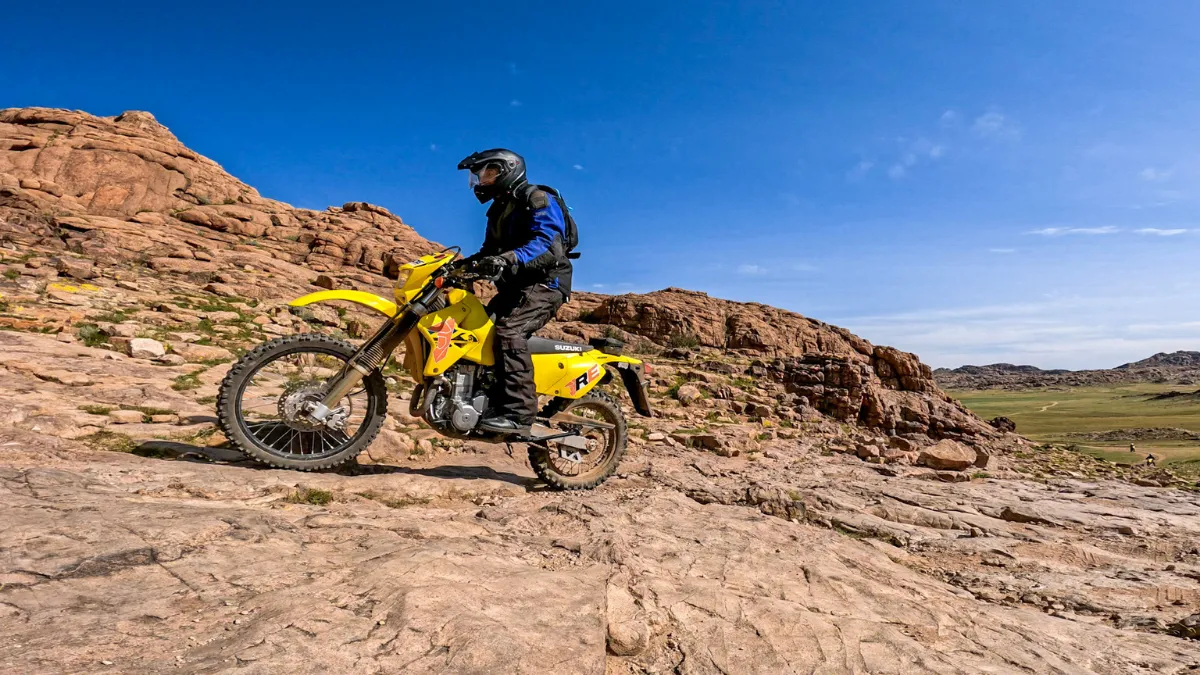
The suspension is a big part of why the DRZ is such a crowd-pleaser for long days on the trail, and ideal for Mongolia. It is famously soft and plush, letting you float over the bumps in a thoroughly agreeable way. The faster you go, the more you find the limits of that softness – this is a trail bike, not a full enduro, so if you want to ride at Dakar pace you will want stiffer springs and some work on the damping. But for the rest of us mortals, the stock kit does the job: chunky USD forks up front, adjustable for preload, and a centrally mounted, linkage-operated shock at the back, again adjustable for preload, on a long, sleek aluminium swingarm.
Stop It Now
Braking is the familiar off-road pattern. On the 21-inch front wheel there is a 250 mm disc with a twin-pot Nissin caliper, and at the rear a 220 mm disc with a single-pot caliper. Feel is good thanks to the long front lever and the rear pedal, with a progressive bite that suits everything from delicate trail braking to a hard stop. They are no Brembo Stylemas, but if you are expecting sportsbike brakes on an off-road bike designed 26 years ago, you need a rethink.
Everything Else
The steel bars are a sensible width with a nice bend as stock, though on an older bike the odds they are still the originals are slim. The cockpit is minimal next to a road bike: a small rectangular LCD behind the headlight cowl, with more trip functions than you need unless you are running a roadbook, plus a clock and a speedo. Alongside sits a block of idiot lights for indicators, neutral, high beam and low oil. That is about it, and to be honest there is not much more on the 2026 DR-Z4S. The seat is deep and comfortable at a tallish 935 mm that sinks a fair bit on the soft suspension, and while the bike is reasonably narrow through the middle when you stand, it is nothing like as waiflike as a KTM or GasGas.
Trail Time
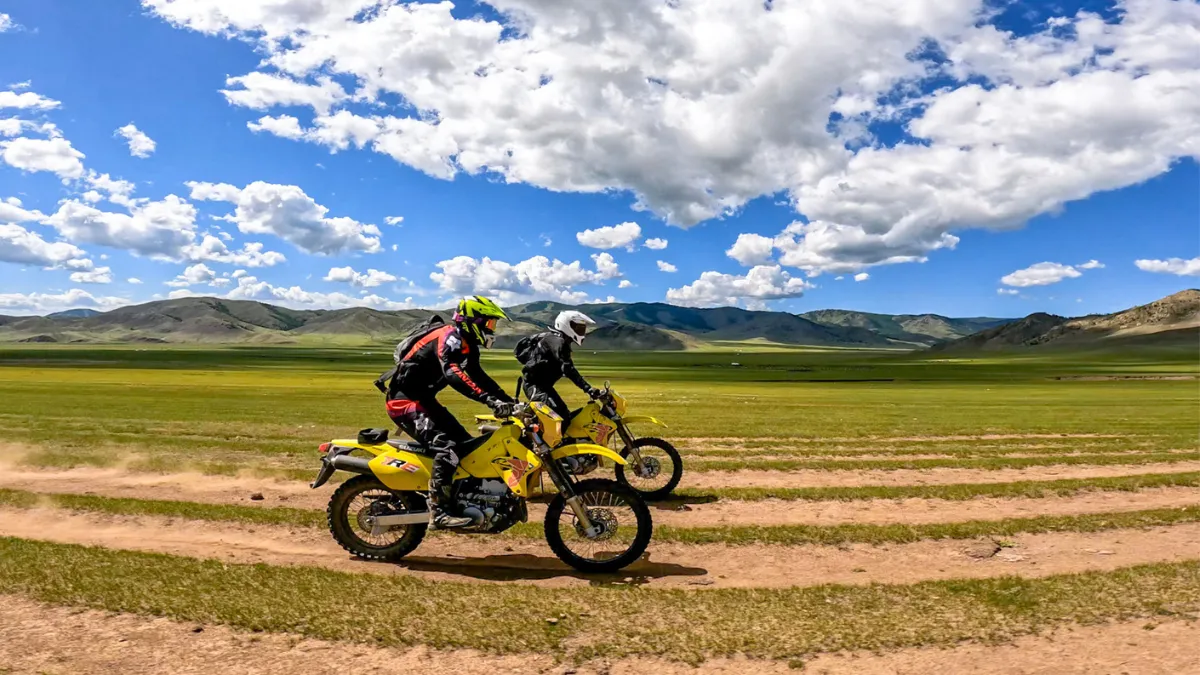
As Suzuki’s best-selling trail bike, you would hope the DRZ performs out on the trail, and it does. That soft yet punchy power, the quiet, almost apologetic exhaust note and the forgiving suspension make it a true all-day bike you can ride from sunrise to sunset – pretty much what we do in Mongolia. From blasting across the wide-open expanses to picking through the technical trails in the cool larch forests up north, it is in its element. The geometry is forgiving enough not to punish mistakes if you are less experienced, yet sharp enough to make a seasoned rider grin like the proverbial Cheshire cat.
If you want to go very fast, you will find the limits of the stock suspension, but for most riding – just like the Warrior’s Trail – the Suzuki simply floats across the landscape. The seat is soft enough to stay sat down, though getting up on the pegs improves the handling and the whole experience when it gets rough. Against a more modern trail or enduro bike you do notice the weight: close to 30 kilos heavier than the bright young things, the DRZ lacks the agility to skip across ruts or loft the front on a fistful of throttle. Horses for courses. If you want the latest riding experience, it will not come from a DRZ – and that is rather the point.
Tarmac and Back
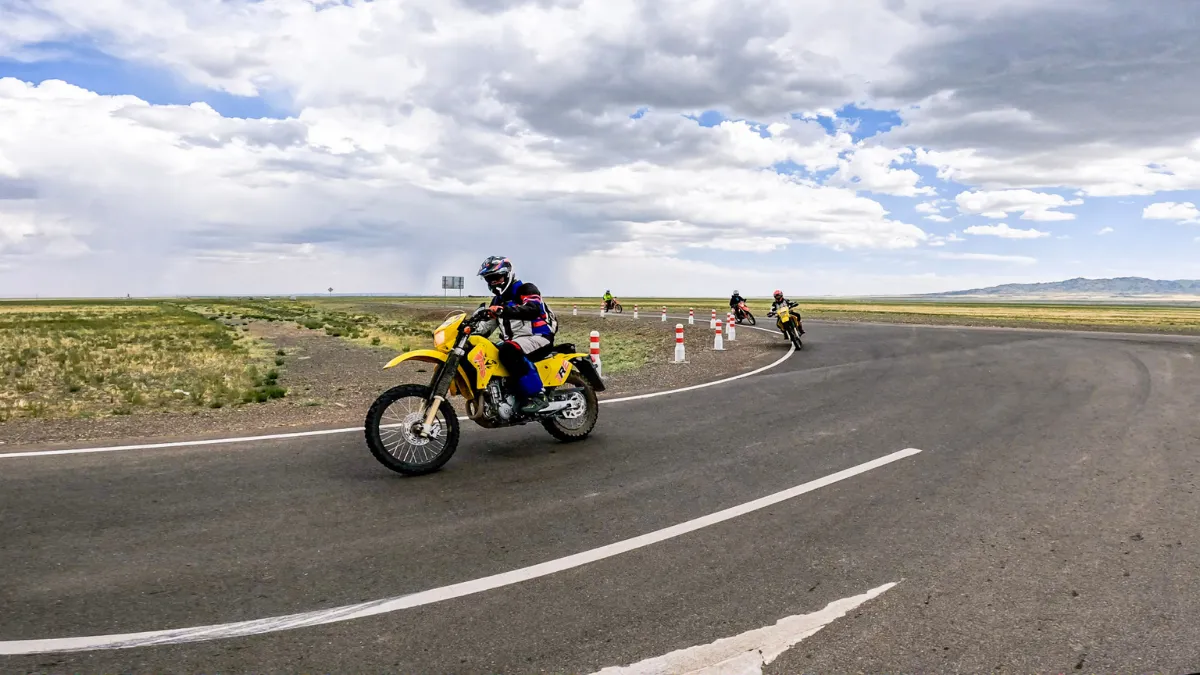
We are clearly fans of the DRZ on the dirt, and it is just as competent on the blacktop. With surprisingly dependable handling given the long-travel, softly set-up suspension, and despite the off-road 21-inch front and 18-inch rear on dirt tyres, it eats up the miles between trails with ease. Next to the blade-like seats of modern enduro bikes, the perch on the 400 is a massage cushion, and it adds to the bike’s likeability on the road – even if now and then you find yourself reaching for a gear that is not there. It will push towards 90 mph, but it is happiest around 60, and at that pace it will ride to China and back.
Decisions, Decisions
So if you are heading to Mongolia, which bike do you choose? The barnstorming power and agility of the excellent KTM EXC 450, or the relaxed, thoroughly enjoyable trail riding only the DRZ delivers? There are merits to both, and it really comes down to the rider you are and how much off-road you have under your belt. For the committed dirt junkie it is the orange bike every time; but if you are coming to Mongolia straight off a road bike and just want something easy to ride all day, the Suzuki is the one. No wonder it has lasted more than a quarter of a century. As the Aussies would say, she’s a beaut.
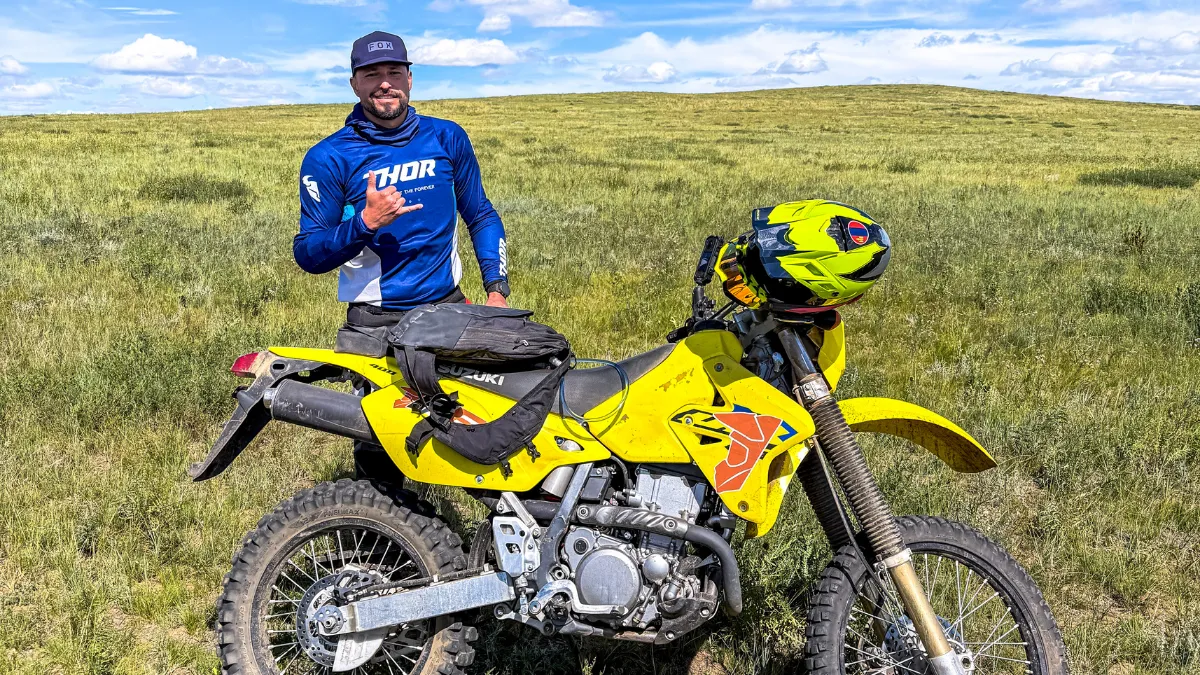
Suzuki DRZ400S Specifications
The Engine
| Specification | Value |
|---|---|
| Design | Single cylinder, 4-stroke, DOHC |
| Displacement | 398 cc |
| Clutch | Cable-operated wet multi-plate |
| Starter | Electric starter |
| Transmission | 5 Speed |
Chassis
| Specification | Value |
|---|---|
| Front brake | 250 mm disc, twin-pot Nissin caliper |
| Rear brake | 220 mm disc, single-pot Nissin caliper |
| Fork | Telescopic, coil spring, oil damped, adjustable damping force |
| Shock | Central shock, progressive linkage, adjustable |
Frame and dimensions
| Specification | Value |
|---|---|
| Frame | Steel, with aluminium subframe |
| Ground clearance | 300 mm |
| Seat height | 935 mm |
| Suspension travel (front) | 288 mm |
| Suspension travel (rear) | 295 mm |
| Fuel tank | approx. 10 litres |
| Weight | 144 kg curb |
Frequently Asked Questions
Is the Suzuki DRZ400S a good bike for a Mongolia tour?
Yes, especially if you are coming from a road background or simply want an easy, comfortable all-day trail bike. It is the most relaxed of the three bikes we run on the Warrior’s Trail, with soft, forgiving suspension and a famously comfortable seat that suits long days in the saddle.
How much power does the DRZ400S have?
Around 35 to 39 bhp from its 398 cc single, depending on the age and condition of the motor. It is soft and usable rather than aggressive, which is exactly what makes it so easy to ride all day.
Is the DRZ400S good on the road as well as off it?
Yes. It is happiest around 60 mph and will cruise tarmac sections comfortably, helped by that plush seat, though you may occasionally wish for a sixth gear it does not have.
How does it compare to the KTM EXC 450 and GasGas EC 350F?
The KTM is the powerful, agile choice for experienced off-road riders; the GasGas is the lighter middle ground; the DRZ is the relaxed, comfortable all-rounder. It comes down to how much off-road you have ridden and the experience you are after.