What Happens Day to Day on a Motorcycle Tour
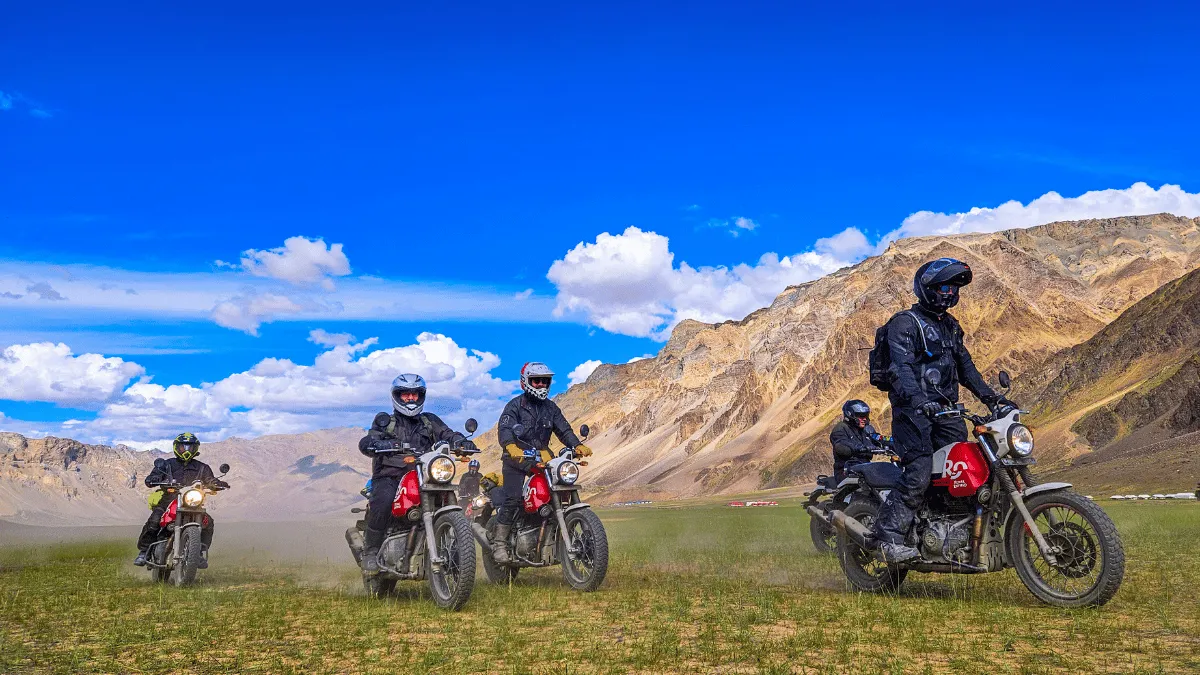
Three questions come up more than any others, whether you’ve booked or you’re still weighing it up. What happens when we get to the accommodation? What happens with my luggage? What do I need to take with me each day?
This is the rhythm of a day once you’re on the road. If you’re still deciding whether a guided tour is the right fit, start there and come back.
Passports and document checks
At larger hotels, you may need your documents checked, so have your passport to hand. For most tours, and especially the ones that cross borders, you’ll be travelling with your passport. Pick one spot for it, ideally a waterproof pouch, and keep it there. One place every time, and you stop thinking about it. Some hotels hold onto passports for a while, but your tour manager will make sure it comes back to you that evening.
Arriving at your accommodation
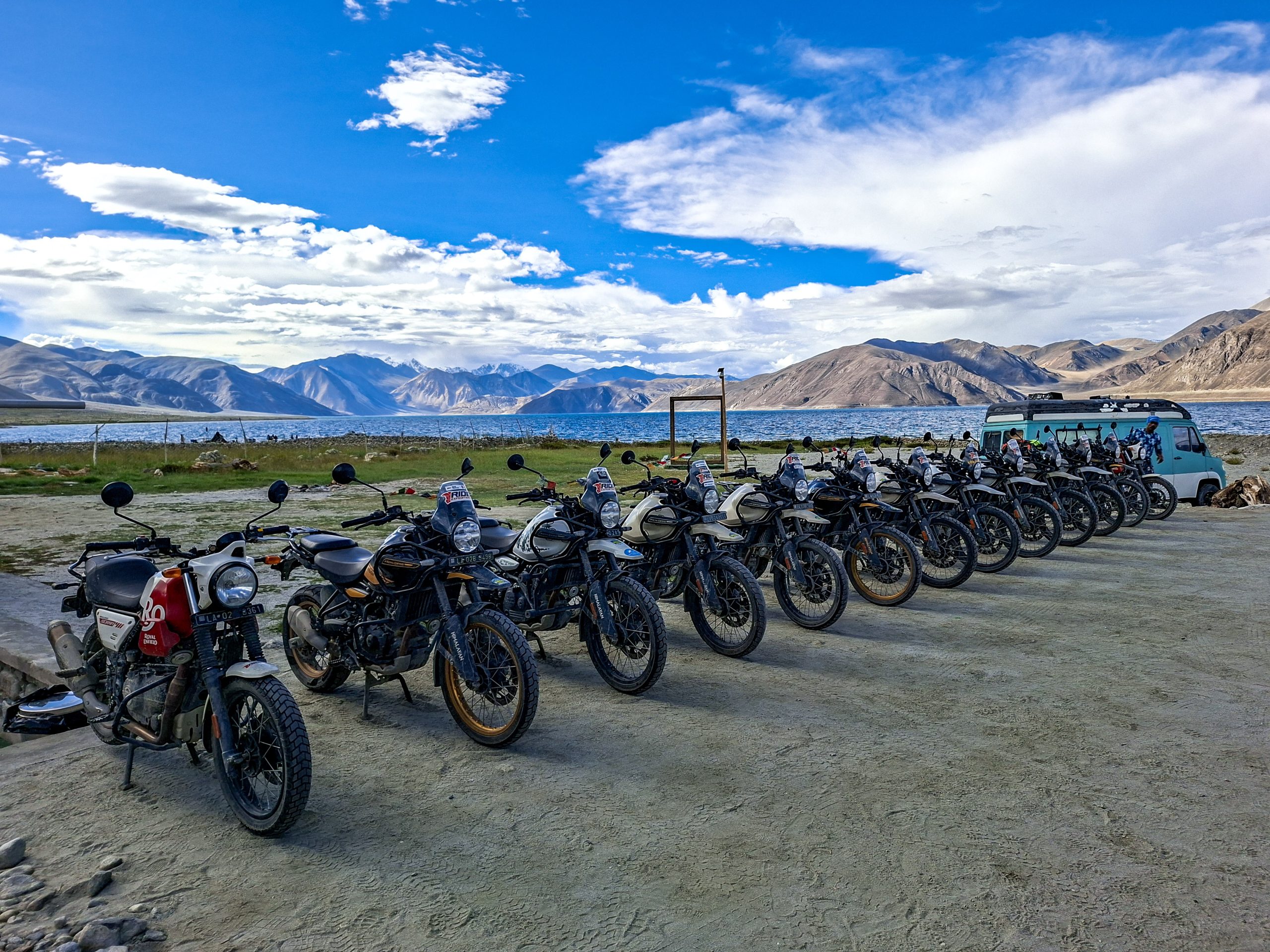
Whenever you arrive at your accommodation, be it on the very first day or on one of the many riding days, there’ll be some admin before you actually get to your room. Your tour manager needs to speak to the host or reception as soon as they arrive. While that’s happening, have a sit down and a cold beer with the other riders.
How rooms are allocated
More often than not, your tour manager will collect all the room keys and hand them out, because they know who’s booked single and double rooms and who’s sharing with whom. Beyond that, they’ve no inside knowledge of which room has the better view, and nobody’s keeping the good ones back. Wherever you end up, after a long day in the saddle, a hot shower and a clean bed beat any view.
What happens to your luggage
Hopefully, by the time you reach your room, an invisible team, often just your tour manager, will have delivered your bag. The one thing we need from you is a tag on each bag, and the tags come with the tour.
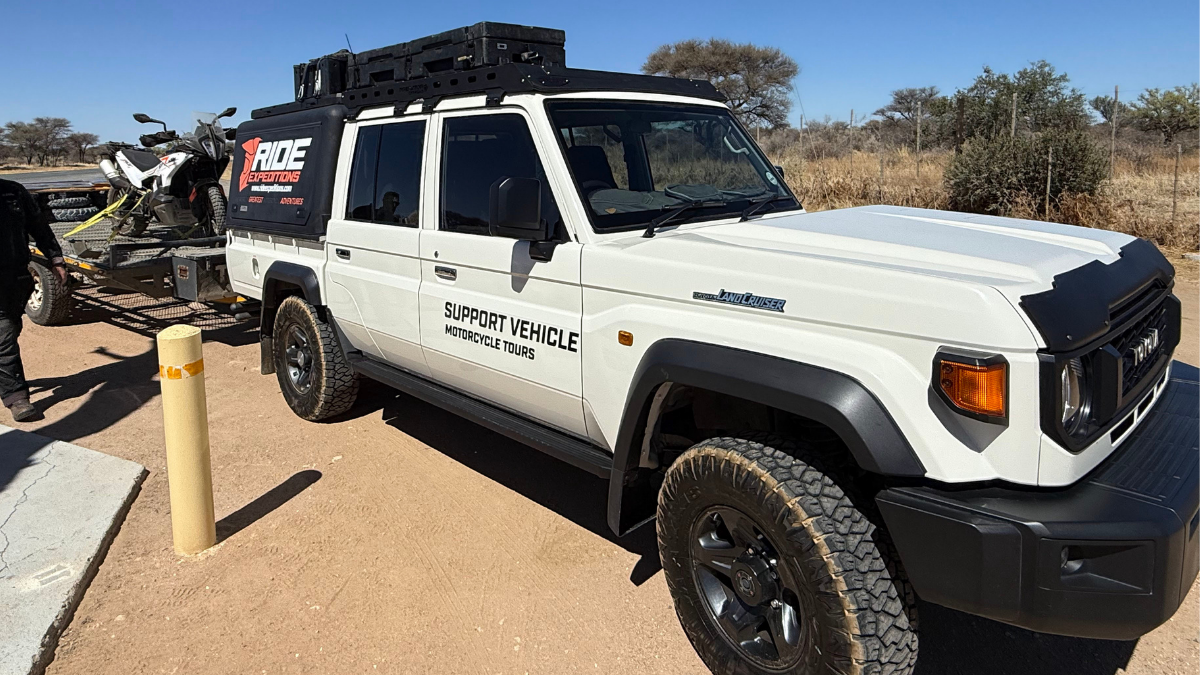
If you’re only somewhere for one night, unpack what you need for the evening and leave the rest. If you’re riding the next day, lay your riding gear out so it’s ready to go in the morning. Bags go in the support vehicle while you’re at breakfast, so the truck can load and the group gets away on time.
Drying wet riding kit overnight
If your kit has ended the day a tad wet, get it as dry as you can for the next day. Hang it around the room and over the radiators, or, ideally, out on the balcony if you have one. Damp riding kit has a distinctly musty tang that’s no great addition to a night’s sleep. If you can get hold of some old newspaper, scrunched-up balls of it stuffed into your boots help draw the moisture out.
Packing your day bag for the morning
While you’re sorting your riding kit, repack your day bag for tomorrow. Carry at least a small bottle of water in the cold, and a full reservoir in the heat. Check the forecast and decide whether to carry waterproofs or leave them in the truck. If they go in the truck, keep them in a small bag in the cab, within reach, rather than at the bottom of your case.
Evening: eat, charge, sleep
With everything ready for the morning, it’s time for a meal, a drink and a bit of relaxation. Before bed, check the breakfast time, what time your tour manager needs your luggage, and what time you’re leaving. If it’s an early start, an early night pays for itself.
A long day in the saddle dehydrates you more than you’d think, so water between rounds is the difference between a sharp morning and a slow one.
Sleep well, and put your phone and cameras on charge before you turn in. If you’re unsure which adapter plugs you need, check the tour FAQs or look it up. As many rooms are short on sockets, a small multi-socket extension lead is a great shout.
Morning: kit on, bags out
When you get up, dress straight away in your base layers, riding trousers and boots. Breakfast goes quickly, and this way there’s nothing between you and the bike afterwards. Leave your jacket, gloves, helmet and day bag in the room for now. Take your luggage out to the truck or trailer, and hand your waterproofs bag to the support vehicle driver with a word to keep it accessible.
Breakfast before a riding day
With the bags ready to load, head for breakfast. Riding all day is physical, so fuel up even if you’d normally get by on a slice of toast and a coffee. Aim for slow-burn carbohydrates, porridge or the local equivalent, and a bit of protein, like a couple of boiled eggs, to keep you steady through the morning.
A moderate plate travels better than a big one when the riding gets rough, and a lighter hand on the fruit, tea and coffee keeps the first hour on the bike comfortable.
The last check of the room
Once fed and watered, head back for the rest of your kit and, ideally, use the bathroom. Collect your gadgets, cameras, phones and cables. A look under the bed and a second trip into the bathroom for your washbag covers the two things that get left behind most, ours included, more than once.
One last check before you roll out: passport in the jacket pocket where you put it.
Getting to the bikes on time
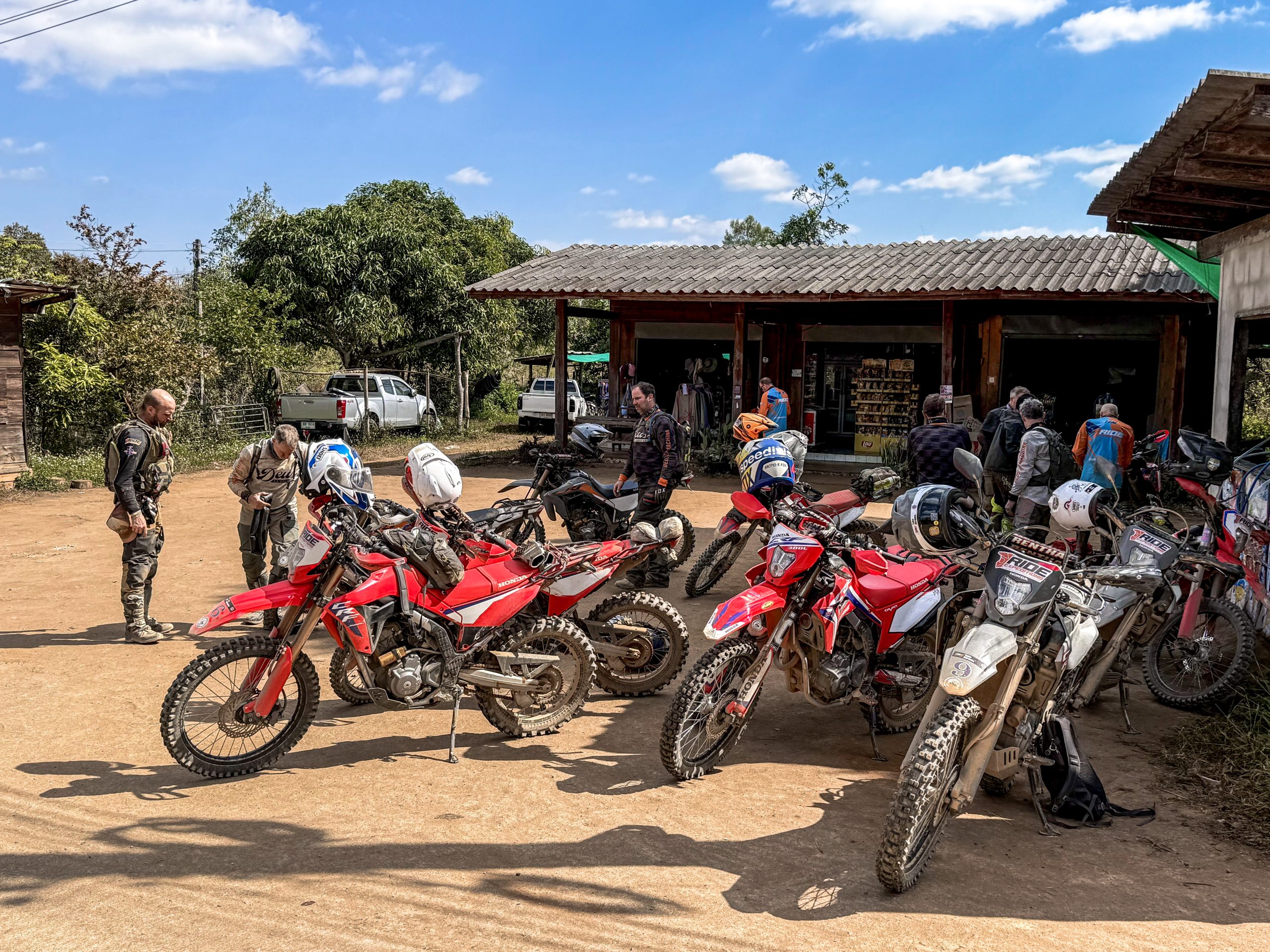
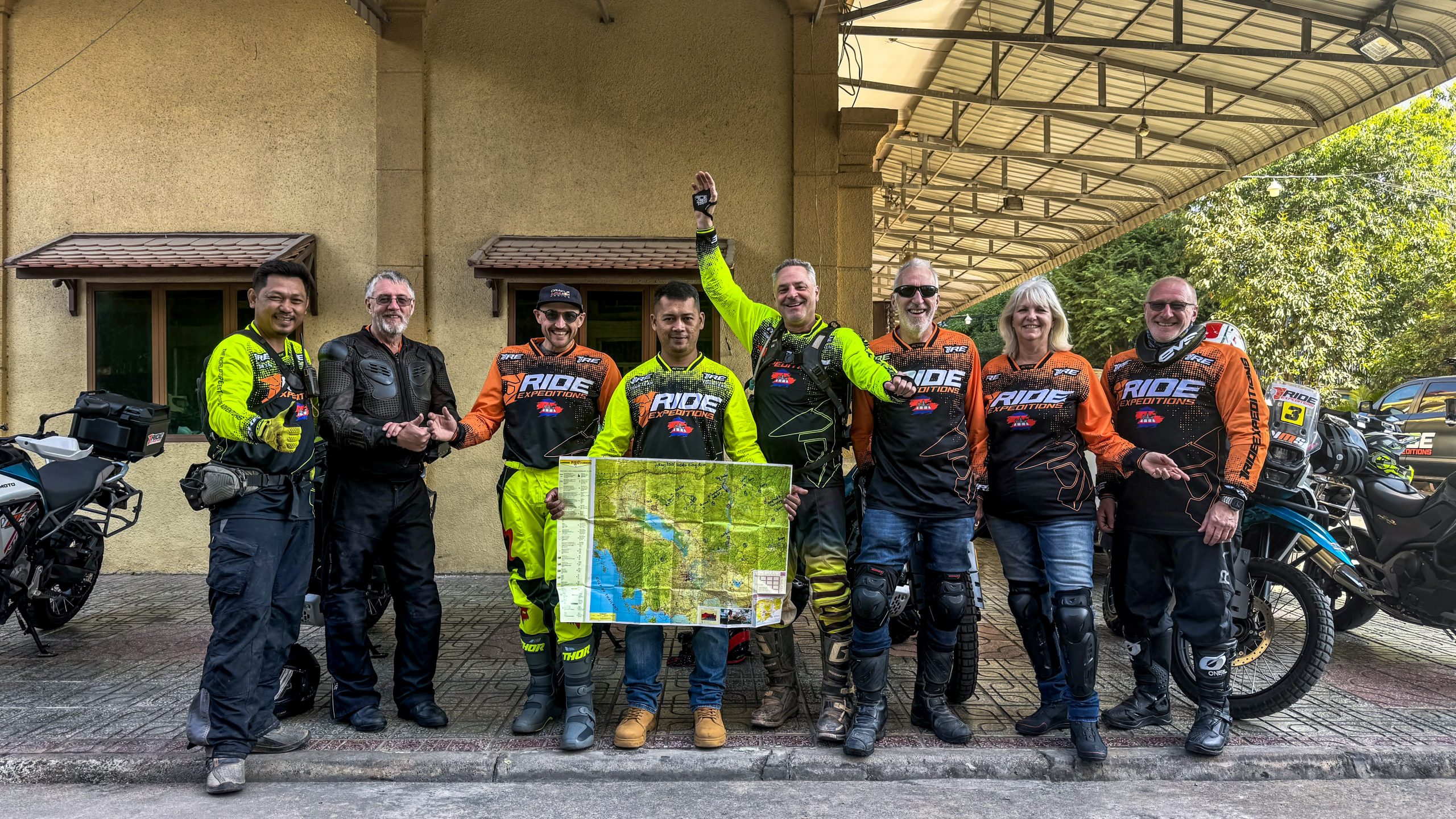
Finally, drop your keys at reception and head out to your bike. Aim to be there about fifteen minutes before the stated departure time, so you can get your jacket on, zip up your day bag and fiddle with cameras at your own pace. Those fifteen minutes are the difference between a calm start and a scramble, and we’ve all had the scramble.
What the riding day itself looks like
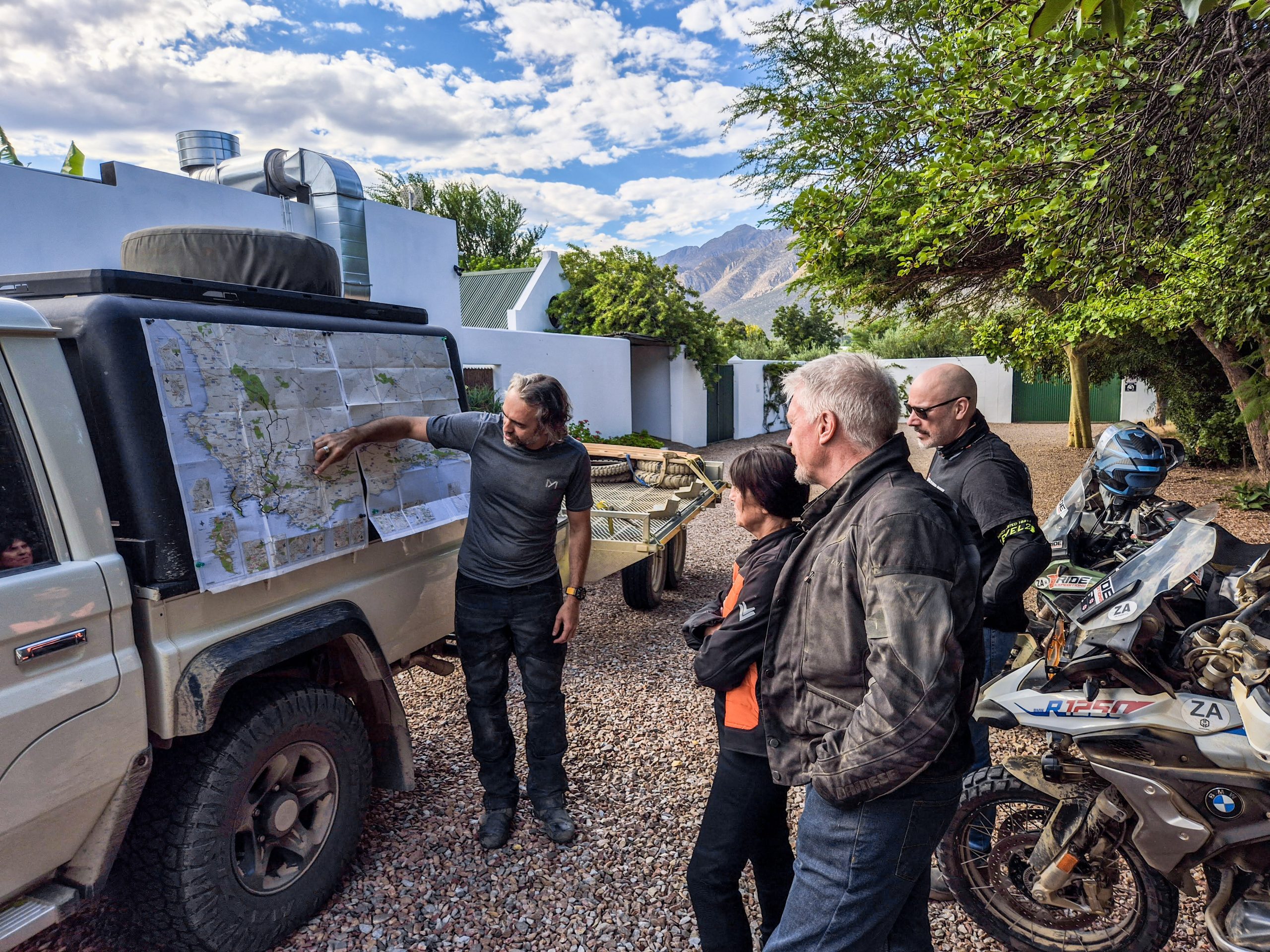
Most tours roll out between half eight and nine and aim to be at the next accommodation by late afternoon. That is not seven hours of continuous riding. It is riding broken up by fuel stops, a coffee, lunch, and the stops you make because the view asked for them. On the tours that publish a figure, the aim is to stay within about six hours in the saddle.
You ride as a group, with Ride Expeditions crew at both ends of it. One leads and holds the route. One rides at the back, so nobody is out there on their own. Depending on the tour that’s your tour manager, a local guide, and sometimes a mechanic as well. Your tour page names the team you’ll have with you.
The support vehicle carries your main luggage, spares, water, snacks and the medical kit, and on several tours a spare bike as well. It travels with the group, but not always on the same track. Where the riding goes somewhere a 4×4 cannot follow, the vehicle takes the road and meets you further on. That is normal, and it is one reason the waterproofs live in the cab rather than the bottom of your case. Your tour’s gear is listed on its own page.
Punctures, a dropped bike, a rider having a harder day than expected: none of that is unusual, and the day is built to absorb it. What your tour carries, from the mechanic and spare bike to the medical kit and the crew’s first aid qualifications, is set out on its own tour page.
Then you pull in at the next hotel and it starts over. Keys, bags, a hot shower, and the first cold one of the evening about twenty minutes away. By about the third day the routine runs itself, and the only thing you’re thinking about is the riding.
Helmets on, gloves on? Let’s ride. See more from the road on our YouTube channel.
Ride It With Us
Get the day right before you go
Every guided tour has its own rhythm, crew and kit list. Your tour page has the details for yours, and the packing list comes through shortly before you ride.