Riding Your Motorcycle in the Heat: How to Stay Cool
Exploring the world on two wheels is one of the most exciting and life-affirming things you can do. You can reach places no car could, ride terrain that would defeat a bicycle, and get under the skin of a culture in a way few travellers ever manage. It’s exactly why the team at Ride Expeditions are so passionate about getting riders out there, on tours running all the way from Colombia to Cambodia.
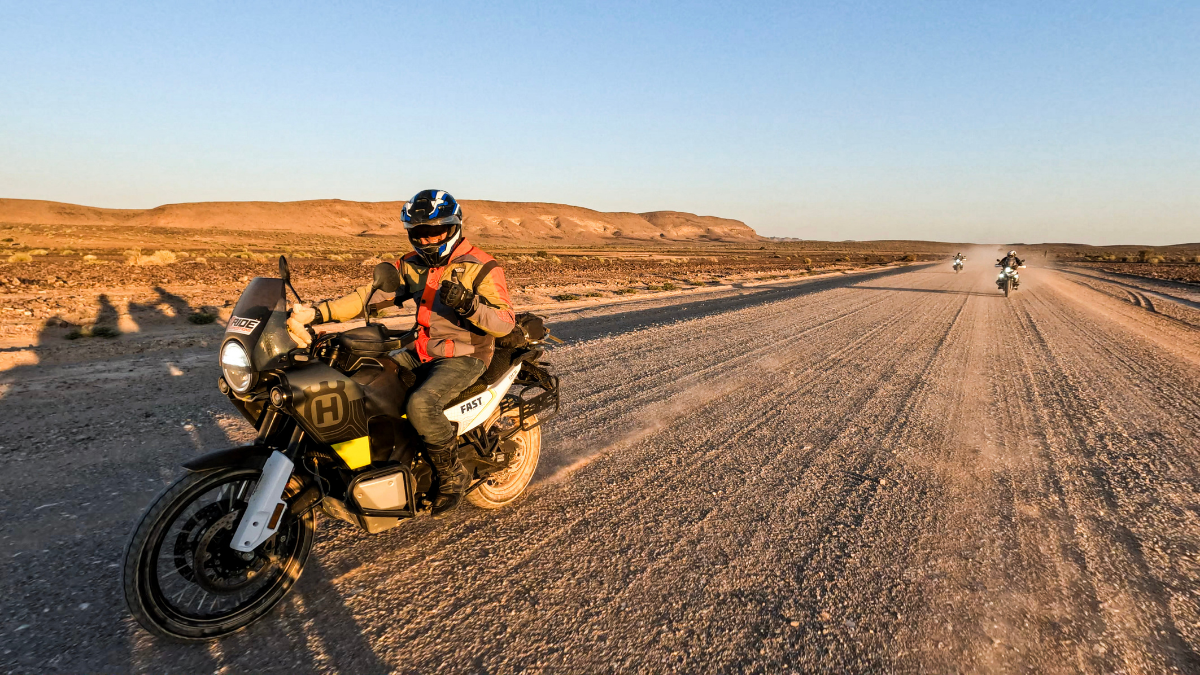
But whichever tour you pick, one factor is constant, and that is riding in the heat. Whether you’re blasting a Royal Enfield through the mountains in the Himalayas or drifting a KTM 890R along the endless gravel of Chile, coping with high temperatures is key to staying comfortable and in control from sunrise to sunset.
Heat changes what you wear, how you drink and how you pace the day. And with global temperatures rising, much of it is just as useful at home.
Hydration Station
There’s only one place to start: hydration. Everything else comes second, because if you don’t start the ride properly hydrated, the day only gets harder. The human body is around 60% water, and while you ride you need to maintain those fluid levels. Get behind and you tire faster and lose focus, which is the last thing you want on a loose descent in forty-degree heat. Maintaining hydration starts well before you sling a leg over the saddle, so make sure breakfast includes plenty of fluids, particularly fruit juice and squash. Coffee is mildly diuretic and will have you stopping to pee through the day, so go easy on the triple espressos with your cornflakes and fill up on the orange juice.
On the Go
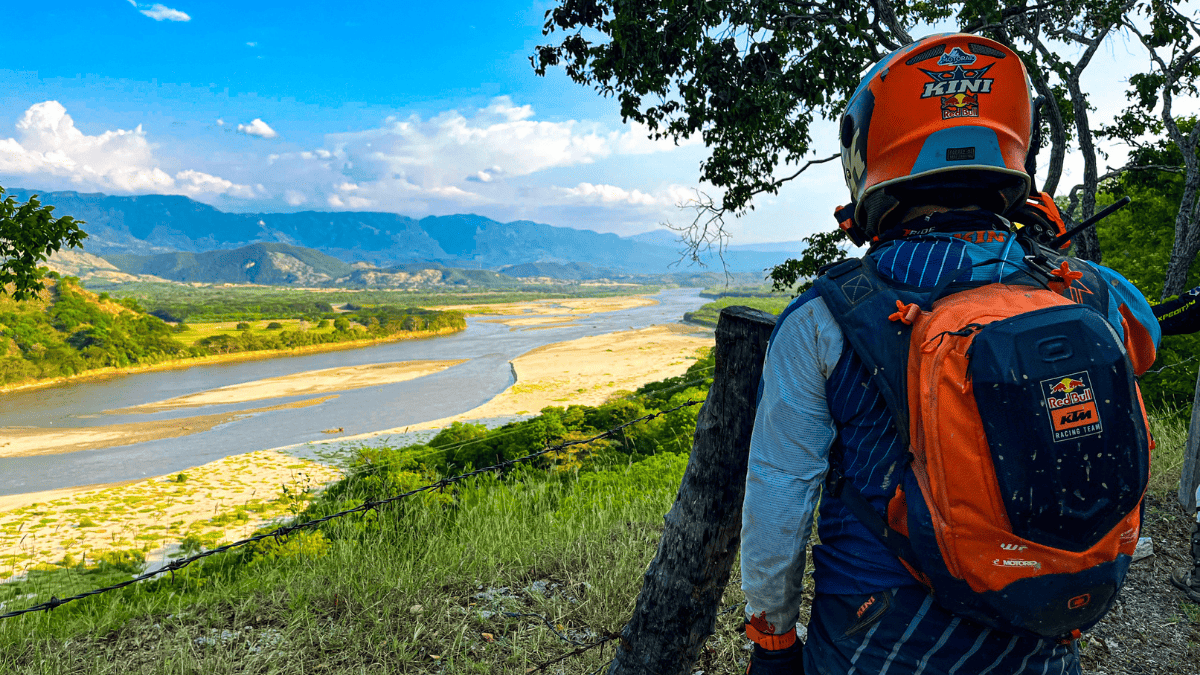
Having filled up at breakfast, you need to keep those fluids topped up on the move. You might think a bottle of water in the tank bag is enough, but in hot conditions it isn’t. If you can only drink at stops, you dehydrate steadily in between – and as a rule of thumb, if you feel thirsty, you’re already dehydrated. The simple fix is a backpack with a drinks reservoir and a bite valve on the shoulder strap, so you can sip as often as you like without stopping. Perfect.
What to Drink
At the very least, fill your reservoir with water – ideally cold to start the day, so fill it the night before and chill it if you can. An alternative is isotonic drinks, which absorb easily: pre-mixed squashes like Lucozade Sport, or isotonic tablets you drop into the reservoir to make your own. Aim for 1.5 to 2 litres of fluid a day even off the bike, so if you’re blasting through the humid forests of Colombia you’ll want considerably more, and more again for the Sahara. Aim to drain your reservoir by lunchtime, drink plenty with your food, then refill for the afternoon.
Engines Off
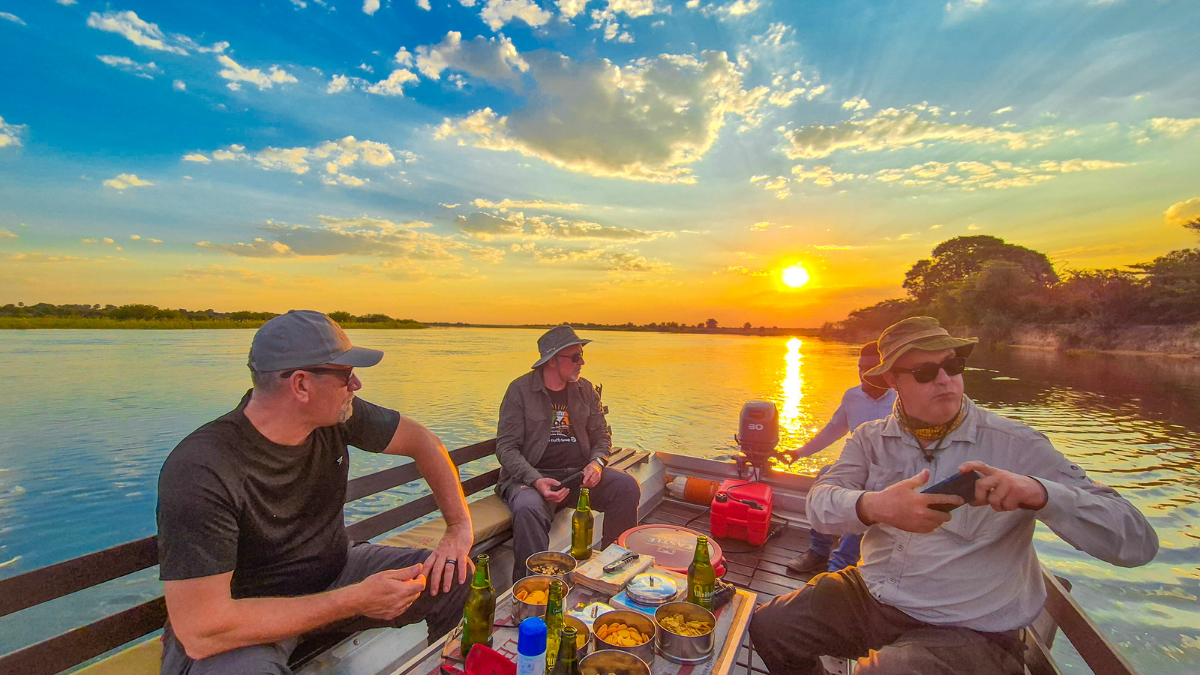
After the ride, a handful of cold beers is almost too tempting to resist, but remember alcohol dehydrates you. Alternate the cervezas with soft drinks so you don’t wake up with a tongue like a pharaoh’s sandal.
Kit Inspection
Hydration dialled, what about the riding kit? There’s no use turning up to ride the tropical landscapes of Laos and Cambodia in the same kit you wear commuting to the office in Basingstoke – you’ll dissolve into a puddle of sweat before the first trail. What you bring depends on the tour, how hot it’s likely to get, and how much tarmac versus dirt you’ll ride. A road-based tour on big adventure bikes along the Garden Route in South Africa demands a very different wardrobe to picking through dense forests and dusty trails in Southeast Asia.
Helmet Options
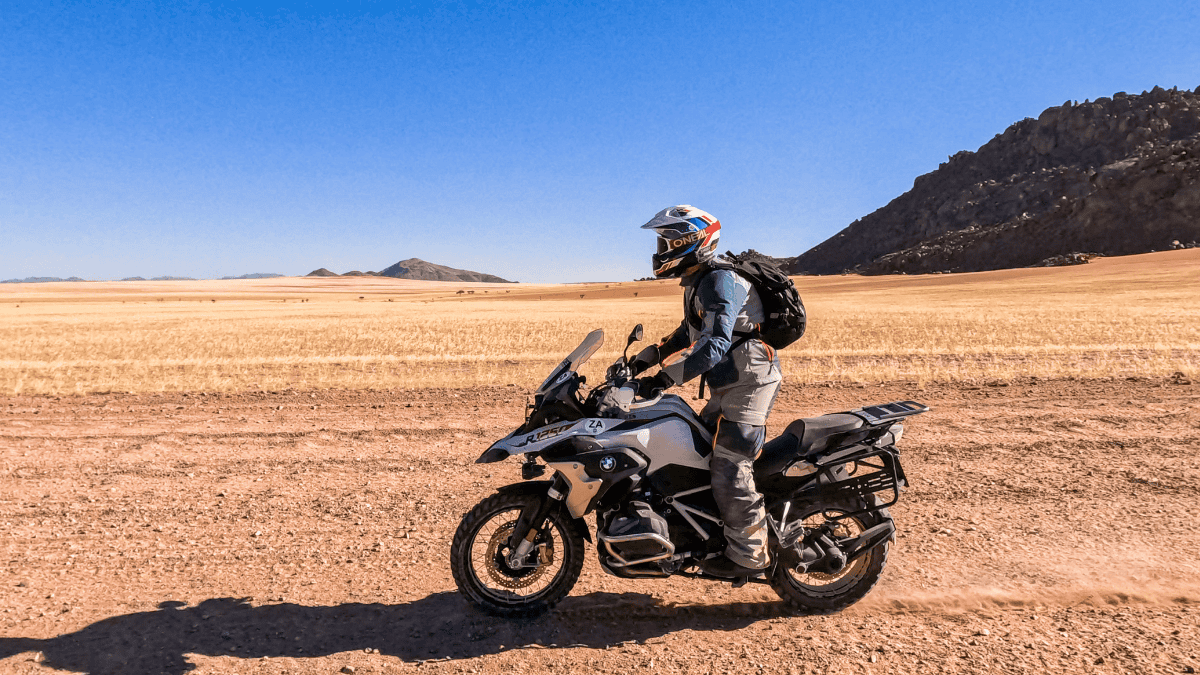
If you’re riding somewhere hot, it’s far more comfortable to pick a helmet that lets plenty of air flow around your face and mouth. Even on road tours, above 30 degrees a road full-face can feel restrictive. Adventure helmets leave more space between mouth and chin bar for easier breathing, and off-road helmets more still, so the hotter it gets, the further towards off-road you should lean. We don’t recommend open-face helmets – they lack the protection of a full face – though flip-front lids are an option. If you’re buying new, make sure it has plenty of vents. And for windy places like parts of Patagonia, an adventure helmet with an easily removable peak is a real advantage.
Visor or Goggles?
Visor or goggles again depends on the trip. For road tours, a visor that cracks open for airflow while keeping road dirt and insects out is fine. Once you’re significantly or mostly off-road or on gravel, motocross or enduro goggles are far better: sitting close to the face they keep dust out much more effectively than a visor, and the thick foam keeps sweat from your eyes. Choose a pair with a Pinlock insert to stop fogging, or carry an anti-fog spray. Goggles work with most adventure helmets too, and if the weather turns to rain you can close the visor onto the goggle straps. For off-road tours, some riders prefer close-fitting safety glasses to goggles – they work well in hot, damp climates but less so in dust, so maybe pack a pair just in case.
Sunglasses or Dark Lenses
If you plan to ride in sunglasses on a road tour, make sure they carry proper impact protection – many cheaper ones don’t. Another option is a dark helmet visor for bright conditions, or a helmet with an internal drop-down dark visor, both easily raised in low light. For goggles, dark lenses suit bright conditions, but for the intense, varied riding of Southeast Asia, a second clear-lens pair for the darker forests is wise.
Adventure Clothing vs Off-Road Clothing
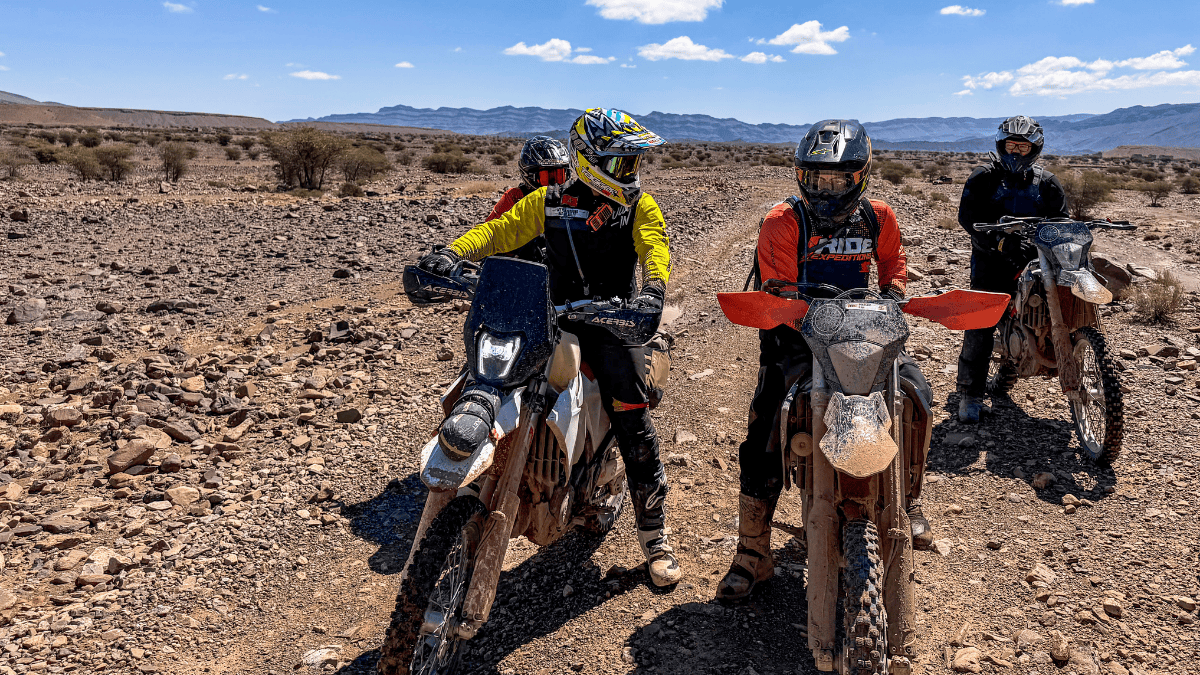
The kit you choose for hot climates is dictated by the country and the ratio of road to off-road. The more tarmac and the less physical the riding, the more you can lean on adventure-style clothing like you use at home; the more dirt and effort, the more you head to the off-road end of the wardrobe. If you have chosen a full-on off-road adventure like our Chasing the Sahara tour in Morocco, it’s pretty much essential if you’re a committed dirt rider to begin with. The kit is more obvious for the off-road tours like Cambodia or Laos, or the tarmac-based adventures in South Africa; it’s the trail and gravel tours that need a little more explaining. What should you wear for somewhere like Colombia?
Adventure Playground
Adventure clothing works for hot conditions provided it comes with plenty of openable vents and ways to move air across your body. On the road that’s usually fine – higher speeds blast air through the jacket and keep you as cool as LL Cool J. On the trail, though, speeds drop and so does the cooling, and even in a heavily vented or mesh jacket you can end up feeling like a boil-in-the-bag curry. It’s less pronounced for trousers – you don’t feel heat as acutely on the legs. You could argue that if it’s too hot you just hand the jacket to the support truck, but then you lose the built-in shoulder, elbow and back protection. Not ideal.
Off-Road Action
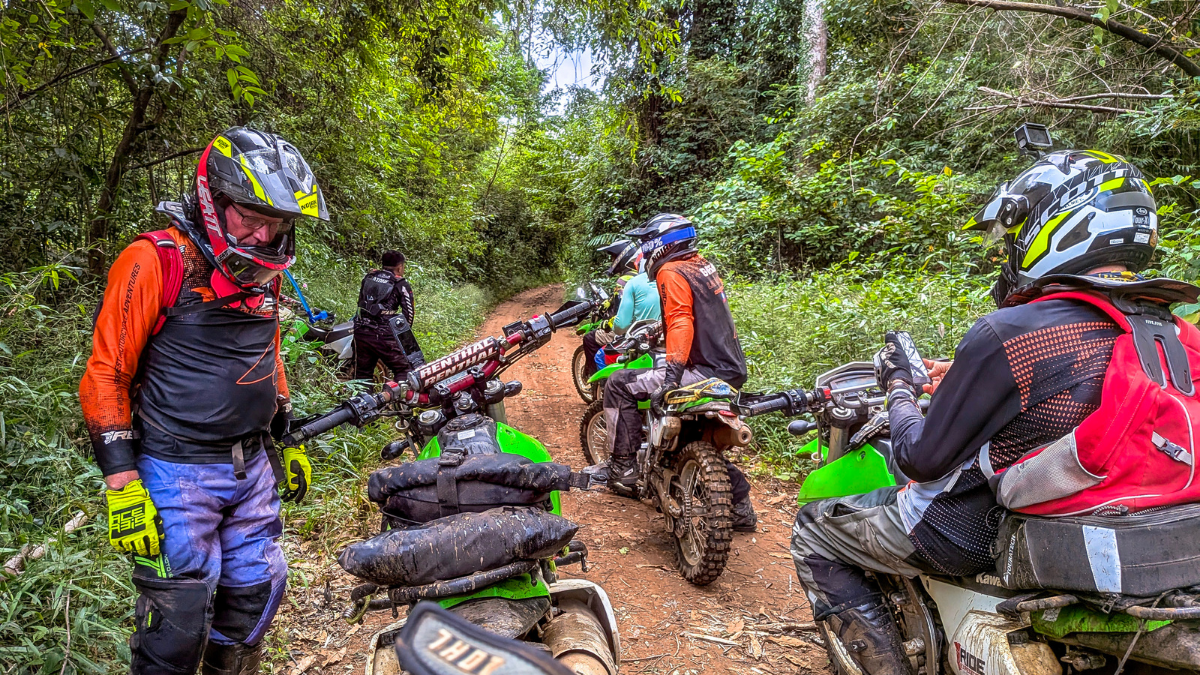
Off-road clothing on trail tours tends to be more flexible and certainly cooler to ride in – all our guides and tour managers wear it, and that’s no coincidence. Look at an armoured or mesh riding shirt with a thin, ventilated shirt over the top: it keeps your core as cool as possible while still offering crash protection. Carry lightweight waterproofs for the odd tropical storm – and in hot, humid conditions you may even be glad of the soaking. For trousers, motocross or enduro jeans are ideal, tucked into proper off-road boots. Avoid integral knee pads, which are rarely in the right place if you fall; we prefer separate knee pads or braces worn over a base layer to absorb sweat, hold the pads in place and reduce chafing. They’re easy to rinse in a sink and dry overnight, and a second pair lets you alternate. Which brings us back to Colombia. Trail and gravel riding in humid heat puts you at the off-road end of that wardrobe: a mesh or armoured shirt and separate knee pads for the trail days, with adventure kit still fine for the tarmac stretches.
Added Extras
A few extras that aren’t essential, but they make long, hot days more comfortable.
Neck Tube
It sounds counterintuitive in the heat, but bear with us. A neck tube keeps off flying insects and road grit and covers the back of your neck from the sun. Pull it over your mouth to keep dust out, and soak it in water at the start of the ride – the slow evaporation keeps you surprisingly cool.
Skull Cap
For those of us with no further need of a comb, a skull cap stops your helmet soaking up sweat. Soak it in water like the neck tube and Bob’s your uncle.
Talc or Anti-Friction Cream
Without going into too much detail, chafing – and the dreaded “monkey butt” – is a real issue in the heat. A little baby talc, or a proper sports anti-friction cream, before you ride can be a revelation. You’ll thank us.
Frequently Asked Questions
What is the best helmet for riding in hot weather?
The more airflow the better. Above 30 degrees a road full-face can feel restrictive, so lean towards an adventure or off-road helmet, which leave more room around the mouth for easier breathing, and make sure it has plenty of vents. We don’t recommend open-face helmets – they lack the protection of a full face.
What should I drink when riding in the heat?
Cold water at the least, carried in a hydration pack so you can sip on the move rather than only at stops. Isotonic drinks or tablets help you absorb fluid faster. Aim to drain your reservoir by lunchtime, drink plenty with food, and refill for the afternoon – and go easy on coffee and alcohol, which both dehydrate you.
Adventure kit or off-road kit for a hot tour?
It depends on the ratio of road to dirt. The more tarmac and the less physical the riding, the more adventure-style kit works; the more dirt and effort, the more you want lighter off-road kit – a mesh or armoured riding shirt that keeps your core cool while still protecting you. Our guides ride in off-road kit on the trail tours for exactly that reason.
How do I stop chafing on long, hot rides?
A little baby talc or a sports anti-friction cream before you ride makes a big difference. Separate knee pads or braces worn over a base layer also help – the base layer absorbs sweat and reduces rubbing, and you can rinse it out and dry it overnight.