Husqvarna TE300i Review – The new benchmark for enduro ?
Husqvarna TE300i Review – The new benchmark for enduro ?
Go back ten years and the paddocks and car parks of every enduro event and trail ride would be filled with a sea of orange. From 125s to 500s KTMs were the bike of choice. But things have changed, and now if somebody arrives on a new bike, chances are that it will be white and what’s more, it’ll be a two stroke. Fuel injection has bought a new era to off-road strokers and at the top of the pile is the all-new Husqvarna TE300i.
We had to test one ….
To say that Husqvarna are on the way back to the top in off-road motorcycling would be a massive understatment. KTM’s revitalisation of the classic brand has been a masterclass in marketing, taking the formerly Swedish marque from BMW and putting it back on the map like never before.
In AMA Supercross they already have one 250 title in the bag thanks to Zach Osborne and if the season pans out as it has been, Jason Anderson looks likely to bring them the coveted 2018 premier class title.
In enduro and hard enduro, Huskies are back on the podium across the world and if that wern’t enough, the white bikes are also making serious inroads into the rally championships.
In commercial terms, the fact that Husqvarnas are constantly increasing their market share compared to sister brand KTM is far from accidental. KTM have simply restricted the availability of the orange bikes and as the two brands are are very, very similar and Huskies are the new and exciting bike to own, buyers have willingly jumped ship and gone white.
It’s a pretty unique and enviable situation for the Austrian brand to be in …
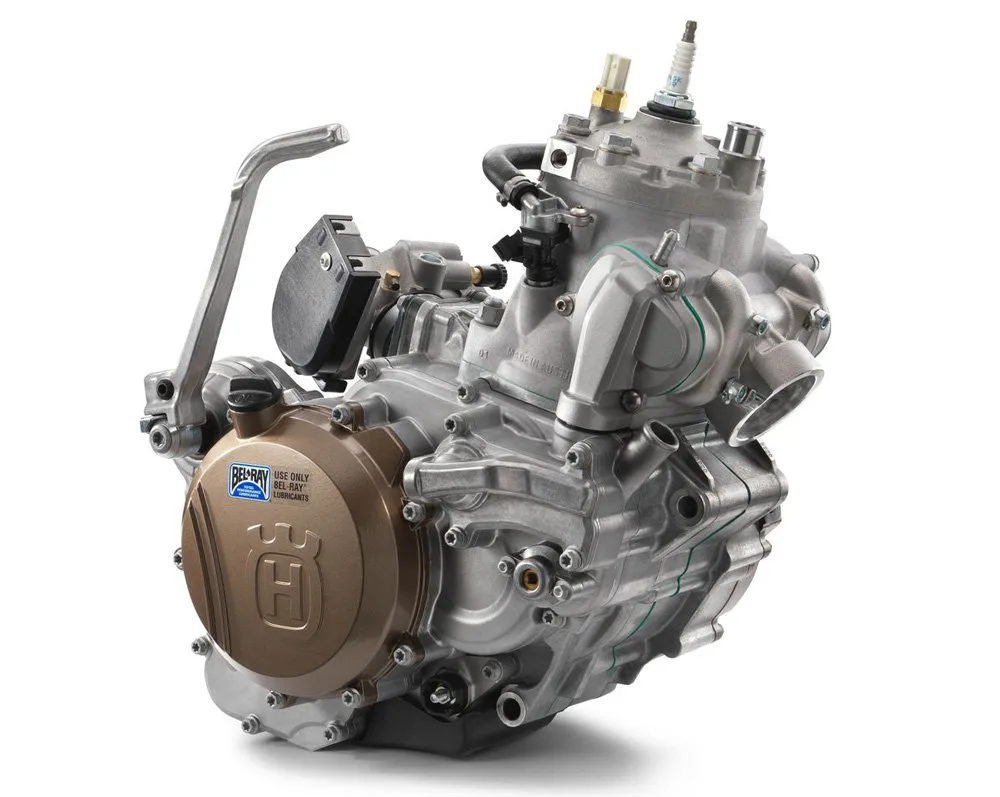
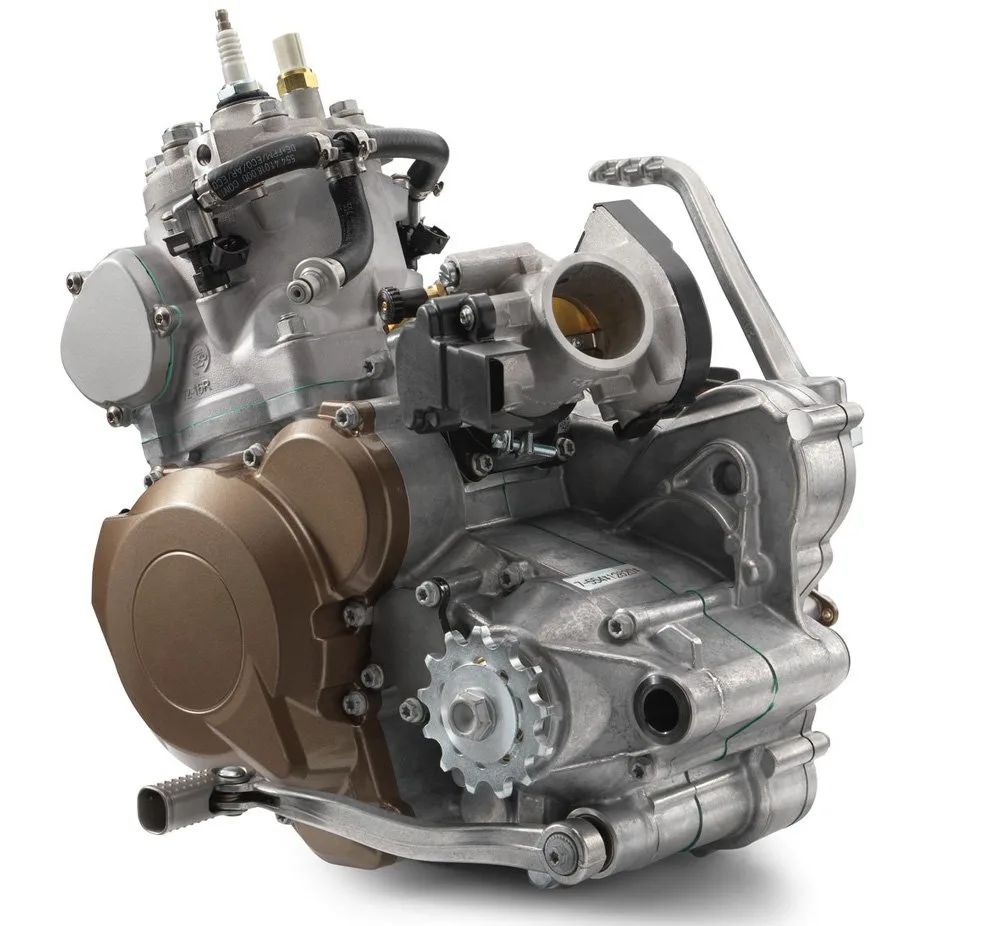
THE ENGINE
THE CHASSIS
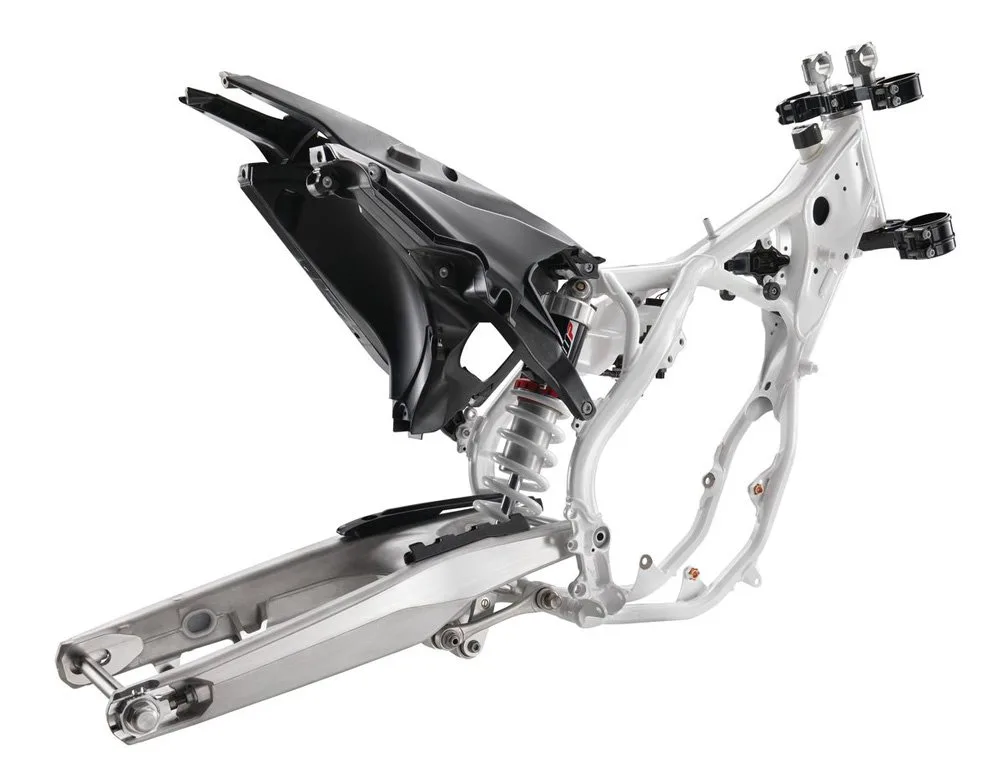
As is the way with KTMs, Husqvarna continue to ignore the Japanese obsession with aluminium frames, keeping with a Chromoly steel spine frame which now is hydro-formed, laser cut and welded together by a team of Austrian robots. Unlike the KTMs however, the Husqvarnas have a composite carbon fibre subframe rather than an aluminium one, and the three piece unit encorporates the air box yet still weighs in at just 1.4 kg.
The front suspension uses the WP Xplor 48 open cartridge forks with springs in both sides but the compression and rebound damping spilt between the two legs and delivers 300mm of travel. At the rear there’s a single WP DCC rear shock with adjustment for compression damping at the top and rebound damping as the bottom, and a lockable plastic ring for preload adjustment. The travel is 330mm.
THE TEST BIKE
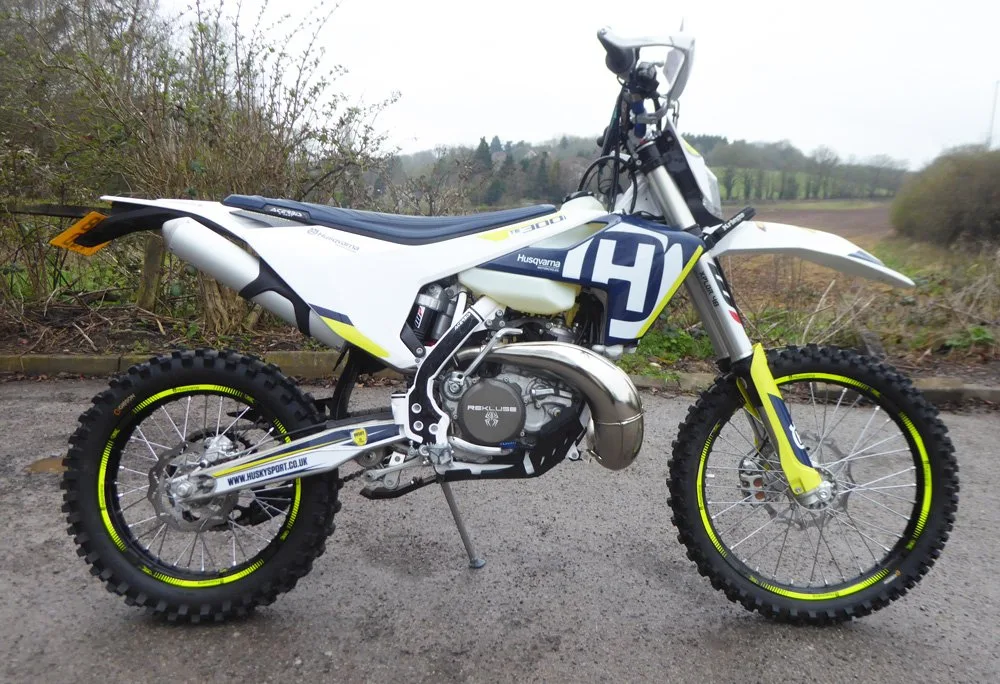
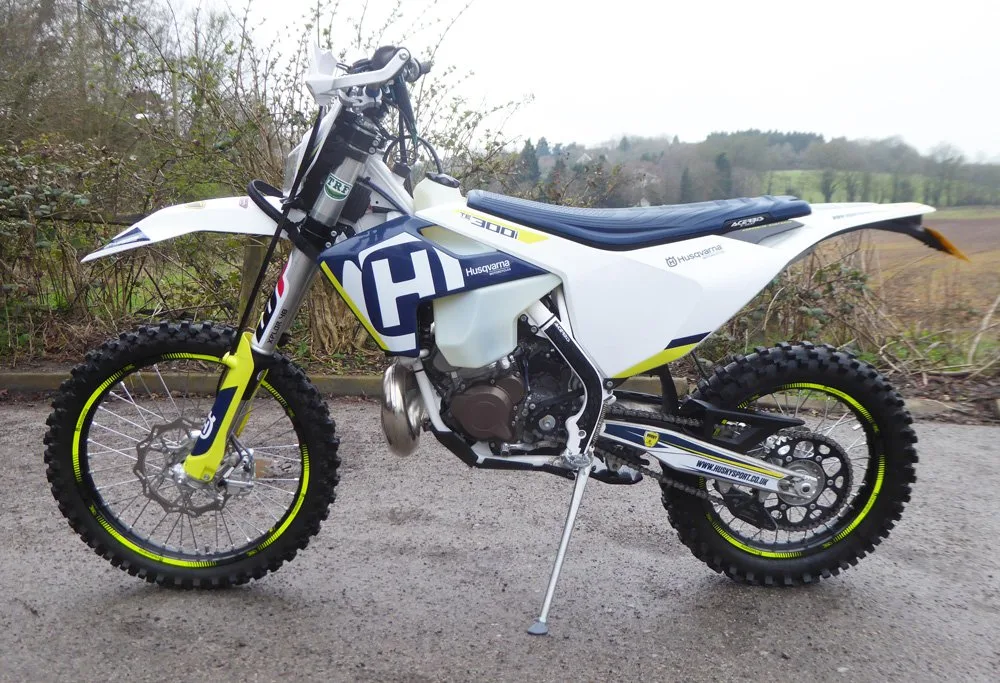
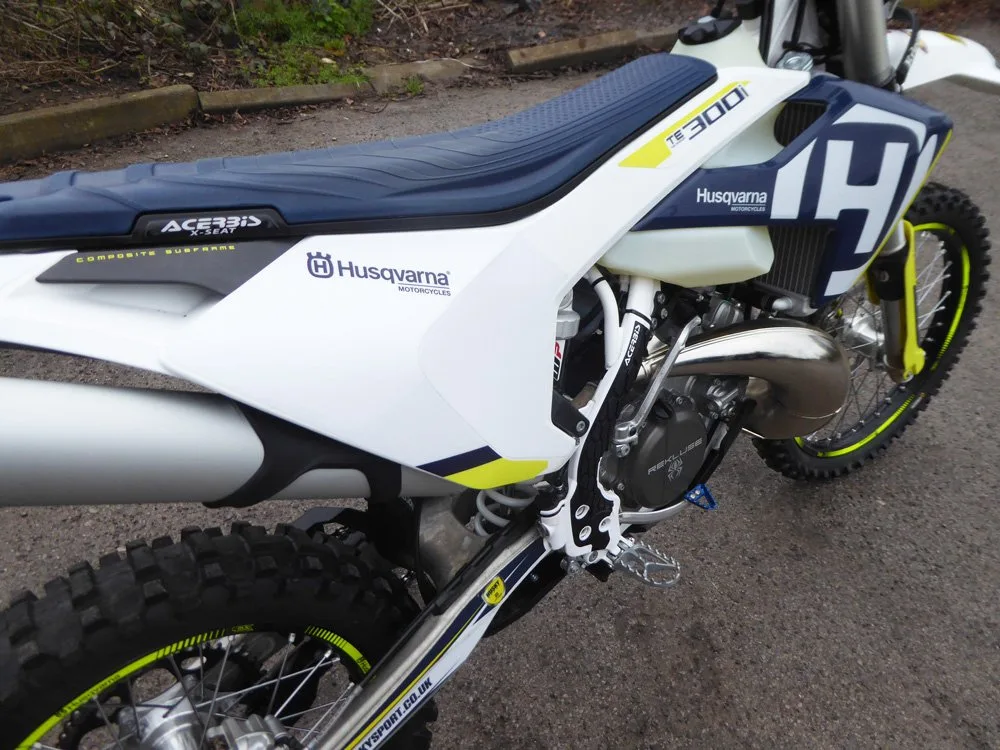
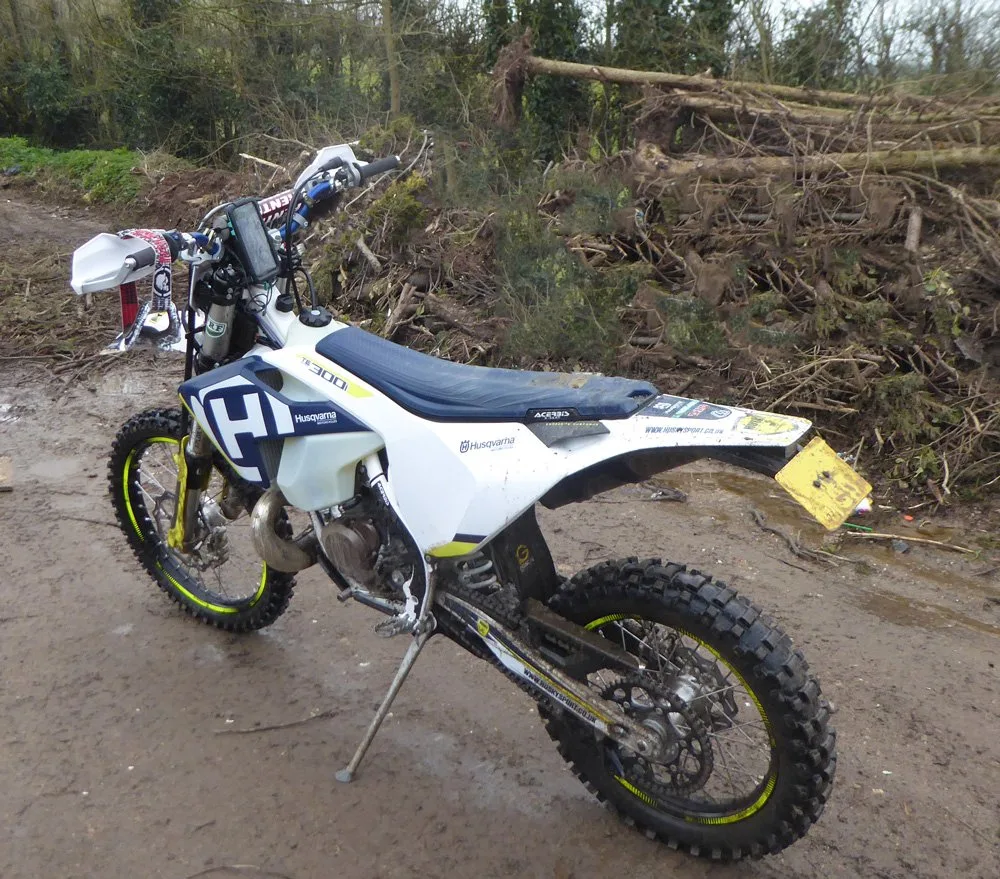
Of course the bike hasn’t remained entirely stock, even though it had only been owned for a few weeks. The main change was the Rekluse automatic clutch which had been an addition to the previous 350 and clearly one that works well for the owner. Once you get used to them, you’re pretty much converted!
Underneath the bike, a substantial hard plastic AXP bash guard had been added, the protection extending right back to protect the vulnerable linkage, something the PDS system never needed …
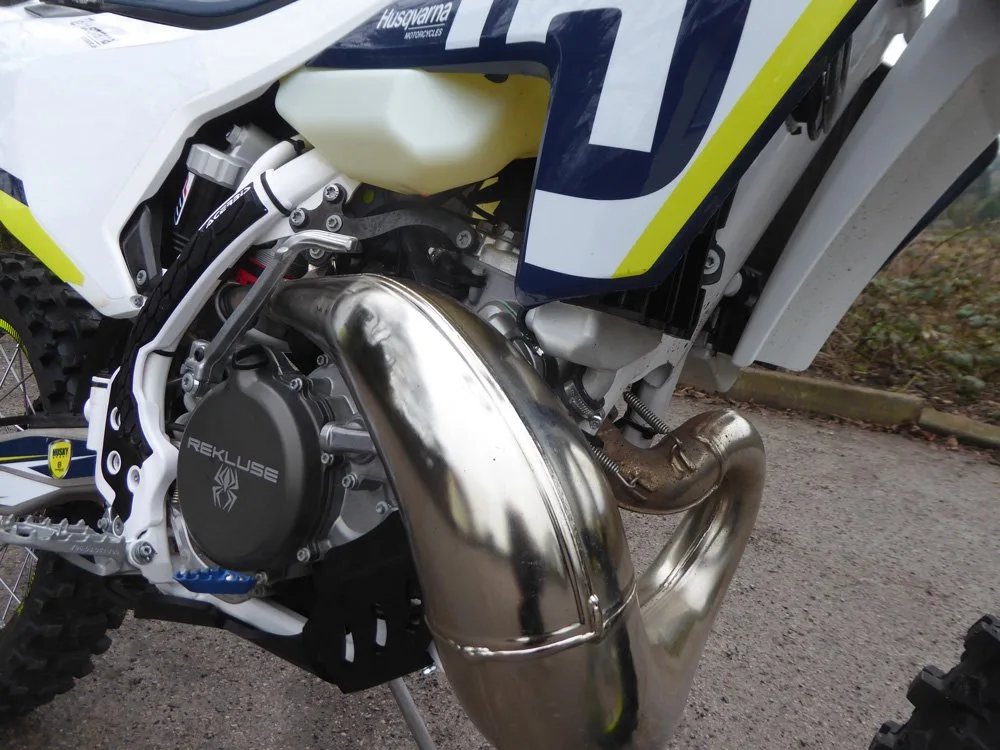
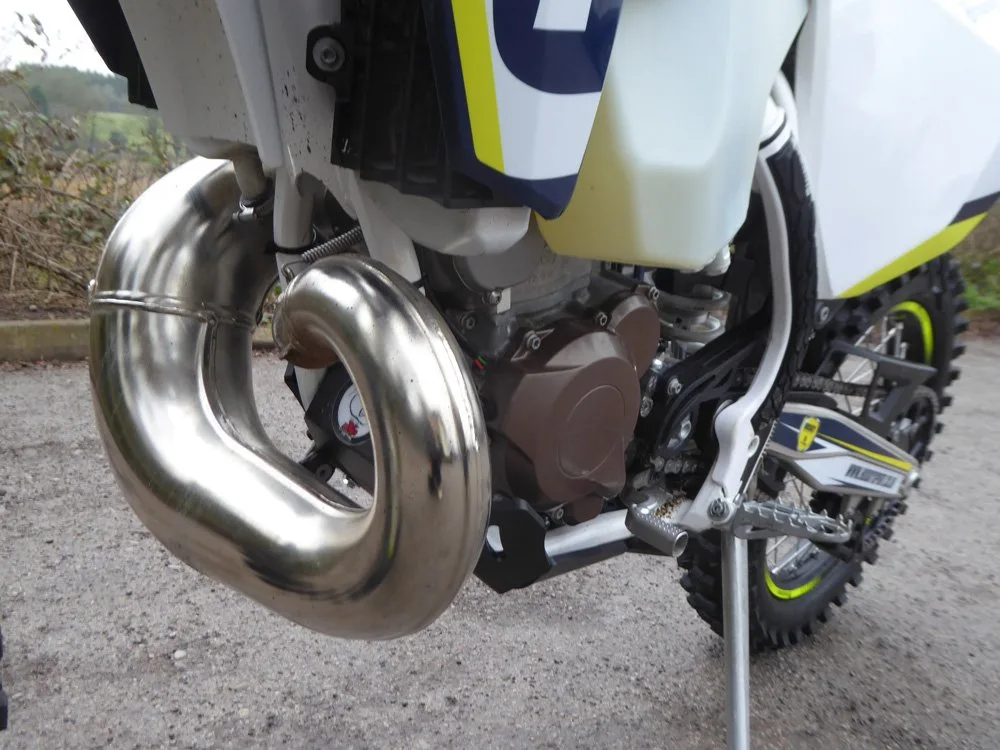
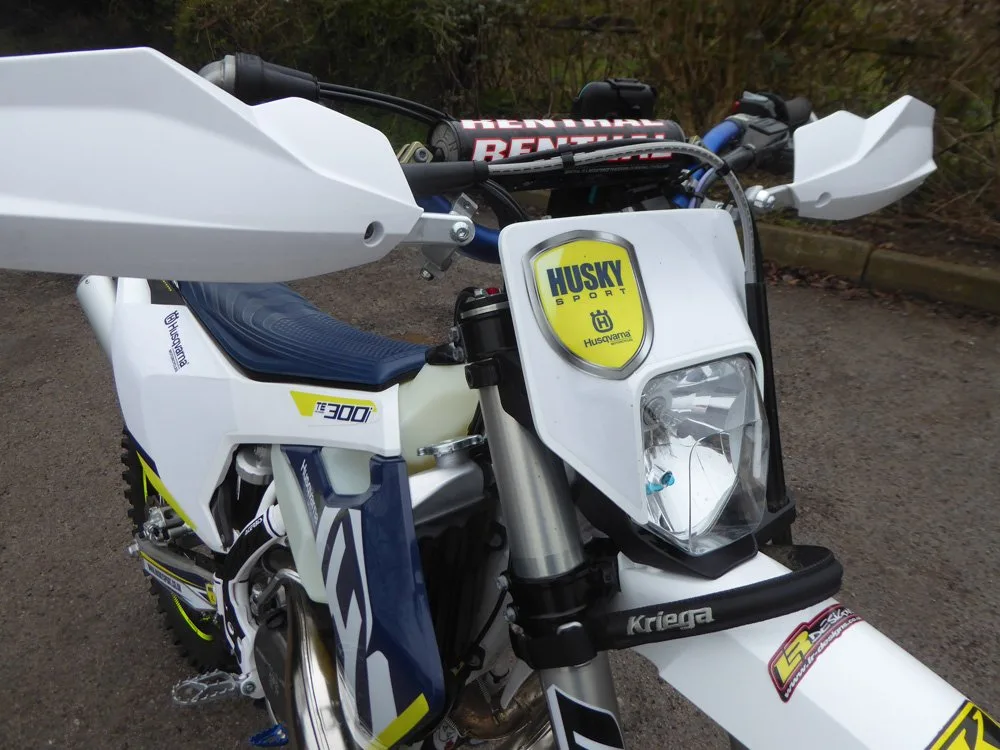
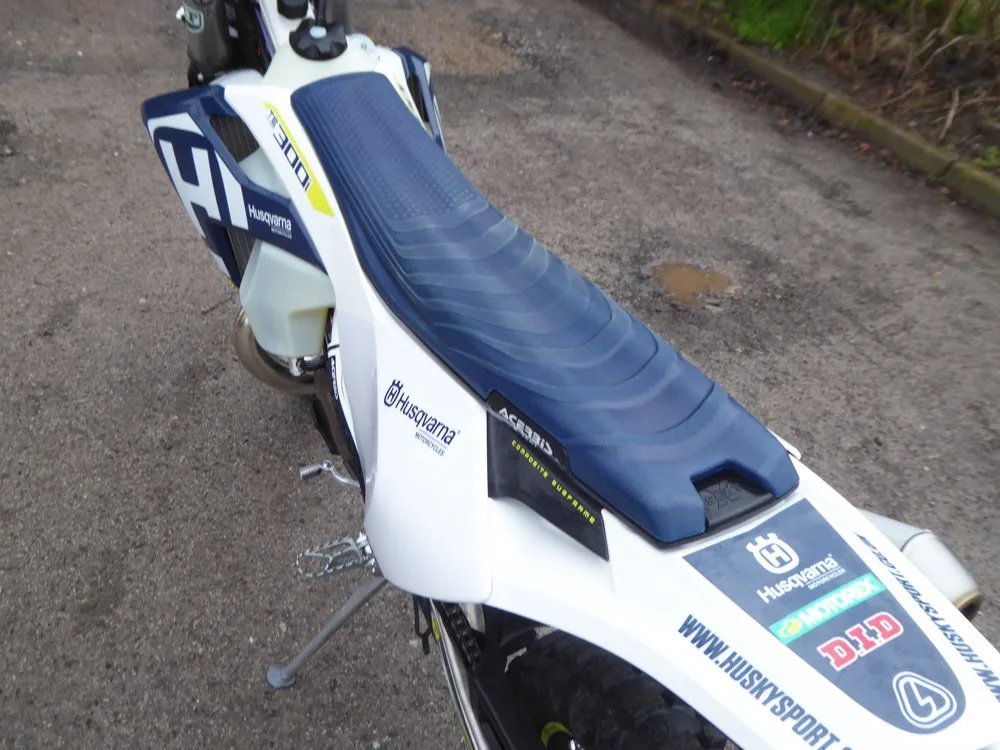
The only other major change it to fit an Acerbis X Seat – a fantastic looking bix of kit that screams factory. The fact that a solid seat is softer than the stock version says a lot, but the Acerbis unit manages that with looking great too.
The Pro Taper bars had been swapped for a set of Renthal 922 Twin Walls in a RC High bend – again like the Rekluse, bars tend to be a thing that once you are converted you stay with what you like.
Beyond these, the rest of the changes are functional or cosmetic – Kreiga Haul loop, Ultimate Pursuits phone holder for GPX tracking ,wraparound handguards, rim tapes, anodised brake pedal end – the usual suspects to customise your ride.
NEED AN EPIC MOTORCYCLE HOLIDAY?
THE TEST
OK so a proportion of these bikes will be bought by full-on racers, taking on everything from club enduros to international hard enduro. And no doubt the bike will excel in a competition environment.
But a massive proportion of the Husqvarnas leaving the showrooms across the world will go to recreational riders, from trail riders in the UK to dual sport enthusiasts in California or weekend warriors in Western Austraila. So this bike has to add up if it’s going to take over the top spot.
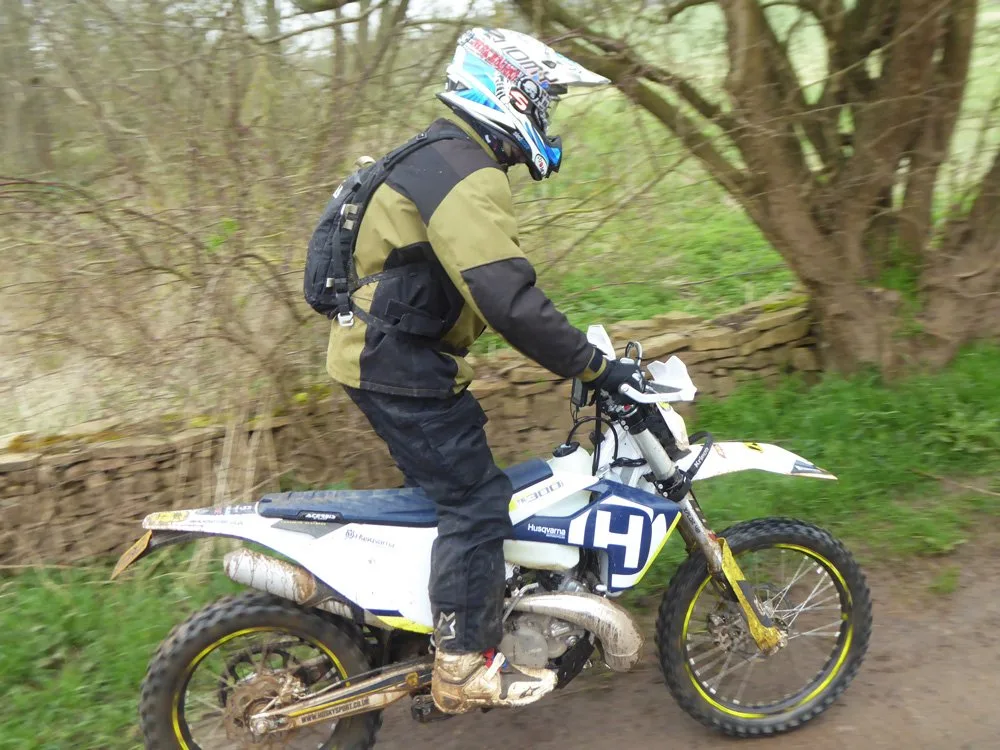
So that’s why our test is a tad more real world than just belting a box fresh bike round an immaculately groomed track and prepared test circuit. We caught up with a bunch of riders for a Sunday trail ride, just like thousands of riders do every weekend from Baja to Brisbane, starting the day with a cup of tea and a bacon buttie rather than a press briefing from the marketing director…
And so on to the bike – slinging a leg over onto the seat the immediate impression is just how light and slim the Husqvarna is. This is highlighted by the X Seat although in reality it’s no narrower than the stock version. The Acerbis saddle is very firm, but as this has been fitted as it’s softer than stock, the OEM seat must share DNA with a plank ..

Thumbing the electric start, the motor spins into life instantly with that wonderfully familar two-stroke crackle. What’s not familiar unless you’ve been riding one of the 2017 KTMs is just how little vibration and buzz accompanies the twist of the throttle. The counterbalance shaft makes the motor buttery smooth, and twinned with the fuel injection only word for the motor is crisp – unbeleivably and beatifully crisp.
It’s actually hard to remember that this is a 300cc motor – it spins up and revs like a factory prepped 125, and just in case you are wondering – that’s a good thing ..
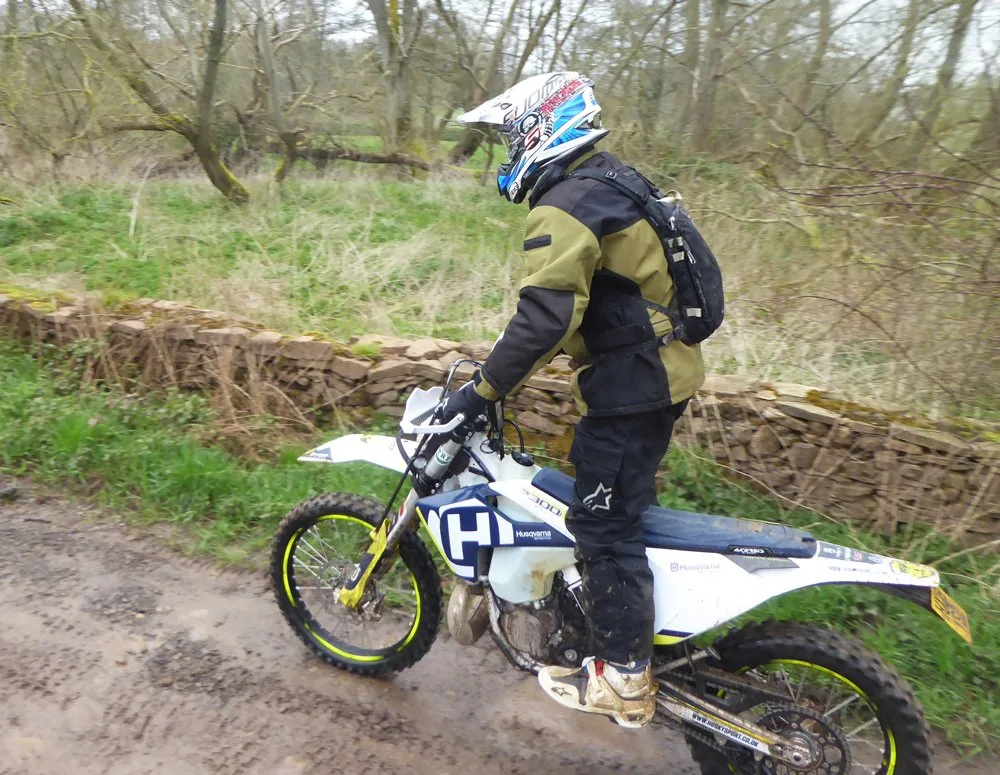
Opening up the throttle and getting underway, the smooth feeling continues and makes for such enjoyable riding. The throttle response is great from trickling over the more technical stuff, to opening the taps and letting that big two-stoke motor breathe fully. The bike feels incredibly light thanks to the narrow chassis, the free revving motor and – let’s be honest – the fact that it’s only 115kg fully fuelled.
If you are already on a KTM like our 2013 KTMEXC250 – that 10 kg or so weight saving is very noticeable – it feels like they’ve shaved nearly twenty kilos because the eight saving has been paired with mass centralisation of the chassis and motor.
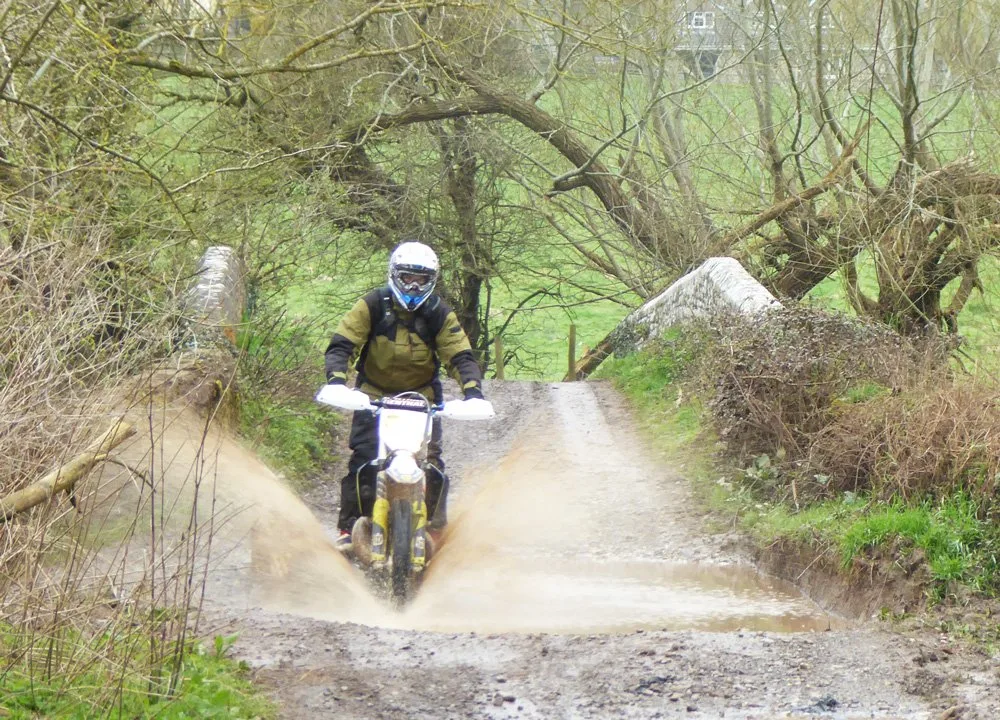
That lightness in the engine and frame is immediately evident in the way the bike handles. On the tricky slow speed stuff the balance is impeccable allowing with precision riding at very slow speeds, wheras as when you’ve turned up the wick, the bike can be easily moved around on the trail.
But a downside, or at least something to be aware of until you’ve got used to it, it that the combination of the big power and immediate response of the motor with the lack of bulk can lead to some scary moments. Get a bit throttle heavy when there’s good grip and the bike will launch towards the horizon like a slingshot – respect is due.
But if you are not in the powerband, the 300 motor has huge torque and will pull like a Massey Ferguson even at really low revs – the flexibility in the power delivery makes it feel unstoppable.
On the suspension side of things, the open cartridge forks are pretty damn good from the off, but clearly would need setting up to the rider’s weight and riding style – don’t assume that the stock settings are right for all or that you just set up things like rebound and compression damping and just leave them for all conditions!
At the rear, the linkage suspension works well, but if anyone other than a top flight enduro rider tells you they can really notice any difference to a PDS system take it with a pinch of salt – KTM dominated the enduro market with PDS long before the step back to linkages.
The preload was set too hard leading to a slightly stiffer feel than was ideal, but there again the owner was heavier so that was to be expected and is an easy fix to get right. With both front and rear suspension, if you have no idea how to set up your bike, setting as per the handbook is a better idea than relying on Facebook advice or a forum warriors, but if you do want to set it up correctly you could follow our set-up guide here. Still no clue – pay for a suspension specialist with a good reputation.
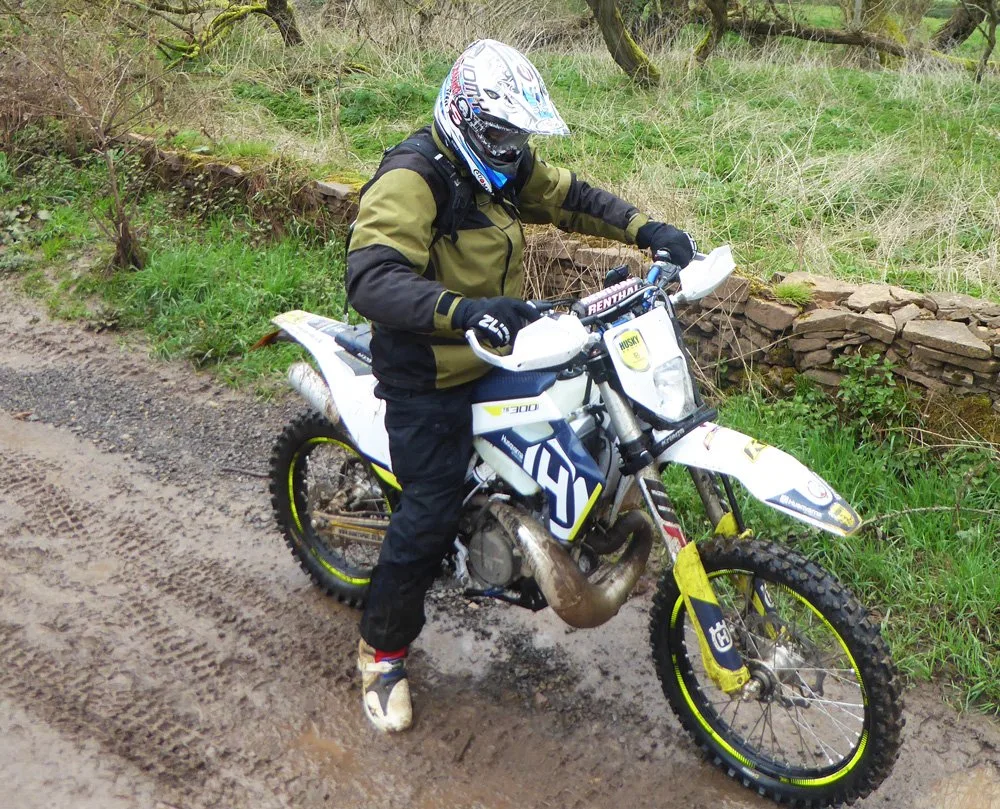
As for how the rest of the bike performs out on the trail, there is little to report, which is exactly what you want to hear. The plastics are nicely sculpted around the rider to allow movement up and down the tall flat seat with ease, and the dimensions and relationship between footpegs, seat and hadlebars is well considered making for seamless transition between seated and standing.
We’re always a fan of Renthal bars and the 922s in the RC High bend are a good option for trail riding but as we didn’t ride the bike with the stock Pro Tapers, then we can’t really say whether they were better or worse!
The footpegs are the new self-cleaning design and although it’s not a problem we’d really agonised about on as daily basis, they do indeed let go of the dirt better than previous KTM / Husky / Husaberg versions.
This is the first year that Husky have swapped over from Brembo calipers to Magura, and doubtless there are purists that will be up in arms about the change. Bearing in mind the Brembos were just a built-to-spec unit to Husqvarna’s requirements rather than a bespoke racing set-up, then the change in manufacturer should not make much difference and we’re please to report doesn’t – the brakes work well from gentle feathering on tricky climbs and descents to hard anchors on the road.
COMFORT

DURABILITY
VALUE

APPEARANCE

REVIEW OF THE HUSQVARNA TE300i – THE VERDICT
So after a thorough testing of the Husqvarna TE300i were absolutely blown away with just how good this bike feels to ride. Regular readers of these blogs that we’re big fans of two-strokes and particularly the KTM EXC250. This bike builds on the considerable talents of the 2017 EXCmodels and the new engine and thanks to the faultless fuel injection, takes it to another level again.
The fact that the owner of this bike had made the transition back to two stokes because of this bike should be a pretty good indicator. The TE300i takes all the convenience and fuss-free running of a modern four-stoke and adds a fantastically powerful yet controllable two stroke motor.

And that’s what is going to make this bike sell by the boatload – Husqvarna can barely keep up with the demand already and once riders realise what a quantum leap this bike is then don’t expect that situation to improve.
The nay sayers will be quick to refer to the teething issues with the early fuel injected KTMs, and in fairness the change did seem to have been hurried from competition testing to production models in a relatively short time. But those same people probably also bemoaned the demise of carburetors on fourstrokes. Ignore them – this is the future and it’s here now.
RIDE EXPEDITIONS REVIEW RATING : HUSQVARNA TE300i
If you want to buy the best and most innovative enduro bike on the market right now, the Husqvarna TE300i is that bike. Yes the 2018 MY KTM EXC300 is pretty much the same, but as the Husqvarna runs a slightly higher spec and costs just a tiny bit more, then it’s not a difficult decision to choose the white bike. It is exceptionally good to ride and we loved it.
Of course it’s so good that it’s going to cause problems. You could be quite happy with your existing bike and then somebody lets you borrow the Husky. The effect is not dissimilar to discovering that your wife has a younger and far hotter younger sister …
SHARE THIS POST...